Writing a packing list around activities
A packing list becomes more concrete when each item belongs to a planned activity. Start with the days and journeys of the trip before choosing individual products.
Translate the itinerary into activities
List situations rather than destinations alone: a train journey with a change, a city walk, dinner, a beach visit or laptop work. The same place can require very different clothing and equipment. Mark what is definite and what remains only a possibility.
Assign the necessary functions to each activity. A long city walk might call for comfortable footwear, weather protection and a small bag. That does not mean buying three new products. First check which things you already own can perform those functions.
Add recurring needs alongside the activity list: personal care, required documents, charging the devices you are taking and individually necessary items. These do not depend entirely on the leisure programme. They form the base that your actual activities then extend.
Recognise shared uses without hiding compromises
One top may suit both the outward journey and a quiet evening. A small bag might hold important documents on the train and daily essentials after arrival. Record these overlaps. They reduce duplicate equipment where the item really performs both jobs.
Some combinations do not work. Wet clothing may not be ready the following morning, and a fully occupied camera bag has no spare room for purchases. Consider use, cleaning and drying in the order of your days. Multiple use is a specific feature of the itinerary rather than a general promise attached to an object.
For optional activities, make a decision before packing. If substantial hobby equipment is intended only for a very unlikely opportunity, consider whether the activity truly belongs on this trip. This does not make necessary safety equipment or personally required items expendable; actual requirements still determine those choices.
Test the list against the packed bag
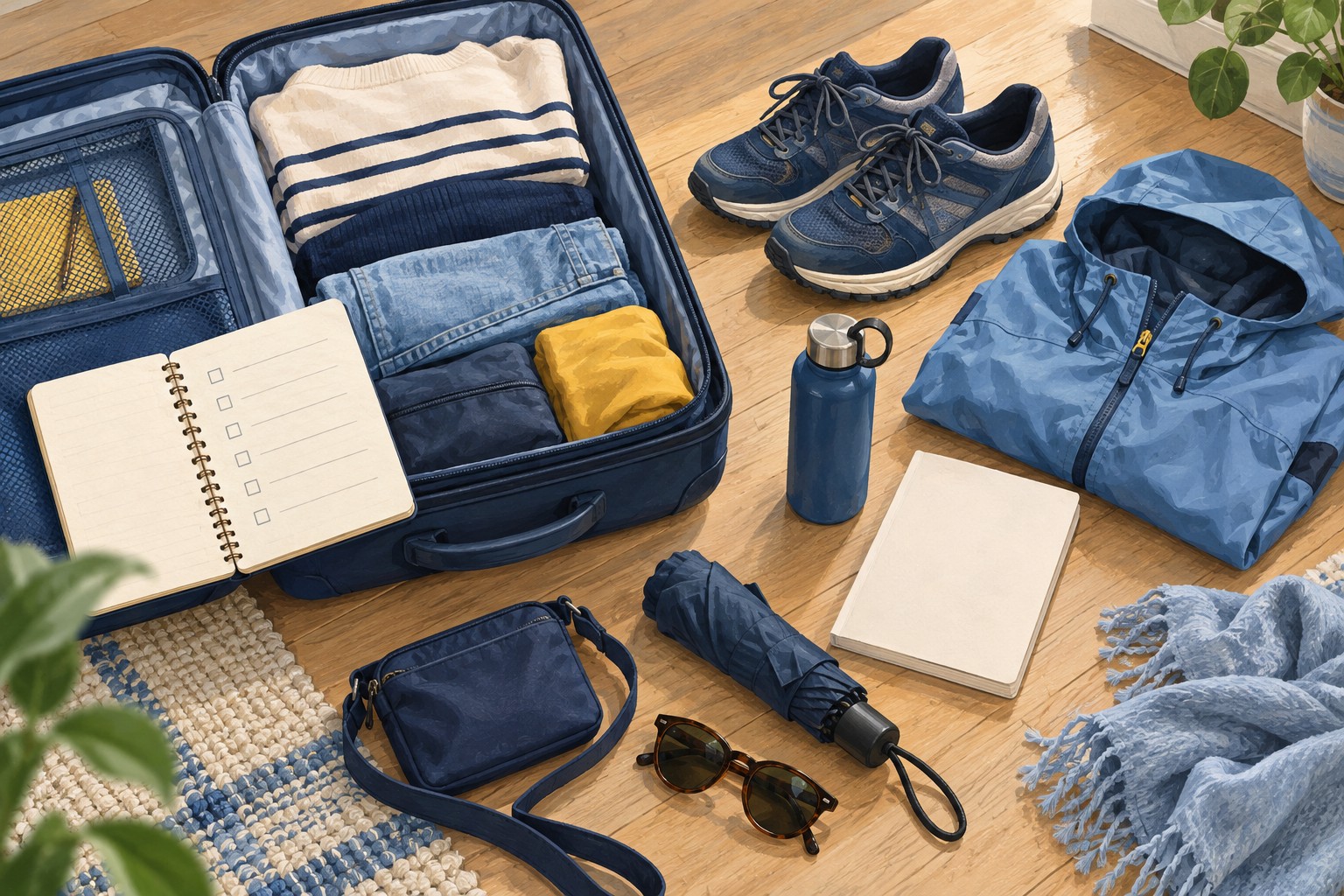
Lay out the selected items and compare them with the permitted luggage dimensions and the weight you want to move yourself. Check the current conditions of your particular transport booking. A theoretically suitable load is not enough if wheels or outside pockets take the bag beyond the allowance.
Pack a trial version according to access. Anything needed during an interchange or at an entrance should be reachable without emptying the entire bag. Pick up the packed luggage and walk a few steps. This can reveal whether an additional small bag complicates the journey.
Make final reductions by returning to the activities rather than removing items randomly. Each change should leave its necessary function covered. The finished list then describes a particular trip and can be adapted deliberately next time instead of growing indefinitely.