Building a weekend budget by cost category
A weekend budget becomes clearer when fixed bookings and undecided spending remain separate. You can then see which parts of the plan are already financially committed before departure.
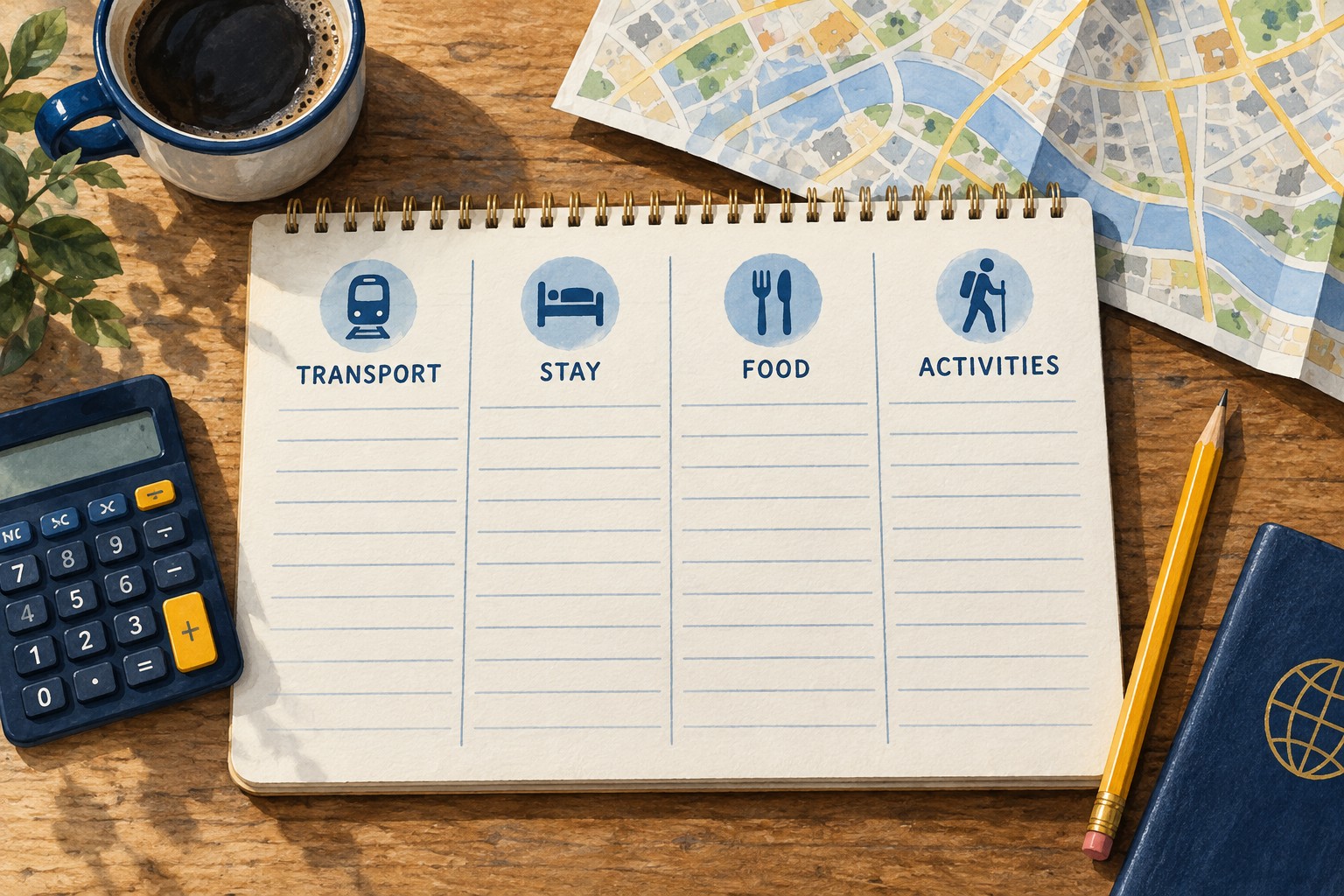
Start with duration and travellers
Define the framework first: arrival day, departure day, number of nights and people travelling. Two nights can involve three days of meals and activities. A calculation based only on two daily allowances may overlook arrival or departure spending. State whether the budget covers the whole group or just your own share.
Enter booked services at their actual prices. Distinguish amounts already paid from amounts still due. Accommodation payable later still belongs in the total. Conversely, a deposit should not be added a second time on top of the full accommodation price.
Estimate the open categories individually
For transport, include the journeys required to reach the accommodation, not merely the main ticket. Check connections, necessary baggage and any reservation you intend to use. Use current offers for your dates and mark unbooked figures as estimates. The price of a different trip in the past is only a starting reference.
Plan food around the actual days and accommodation facilities. Included breakfast may cover one meal, but it says nothing about drinks, lunch or departure arrangements. If you intend to cook, remember that a small grocery shop does not always allow you to buy precisely the quantities you will consume.
Separate definite admission plans from optional activities. A museum visit you have decided to make belongs in the core budget, while a possible extra tour remains identifiable as an option. This lets you reduce spending deliberately without mixing necessary costs with discretionary additions.
Include local journeys too. Accommodation outside the centre may create more trips than a central base. Assess a day or multi-day ticket against your intended use instead of automatically treating a pass as cheaper. A day spent largely walking may suit a different ticket pattern.
Use a range where the price remains uncertain
For undecided costs, a lower and higher plausible estimate can help. In an invented example, food and small activities might total between 90 and 130 euros. That is not a price recommendation; it makes a 40-euro uncertainty visible. Replace it with figures appropriate to your actual plans.
Keep a separately labelled allowance for changes. Its size depends on the journey and your circumstances, so a universal percentage is not especially useful. What matters is that the same money is not allocated simultaneously to an optional activity and to the contingency allowance.
Review the total before making further bookings. If it does not fit, change a real part of the plan: accommodation location, activity choices or duration. A budget does not become more realistic by hiding necessary transfers. Retain the original version so you can later identify which assumptions worked.