Understanding travel adapters and chargers
Travel adapters, chargers and voltage converters do different jobs. Before buying, identify which connection between the wall socket and your device is actually missing.
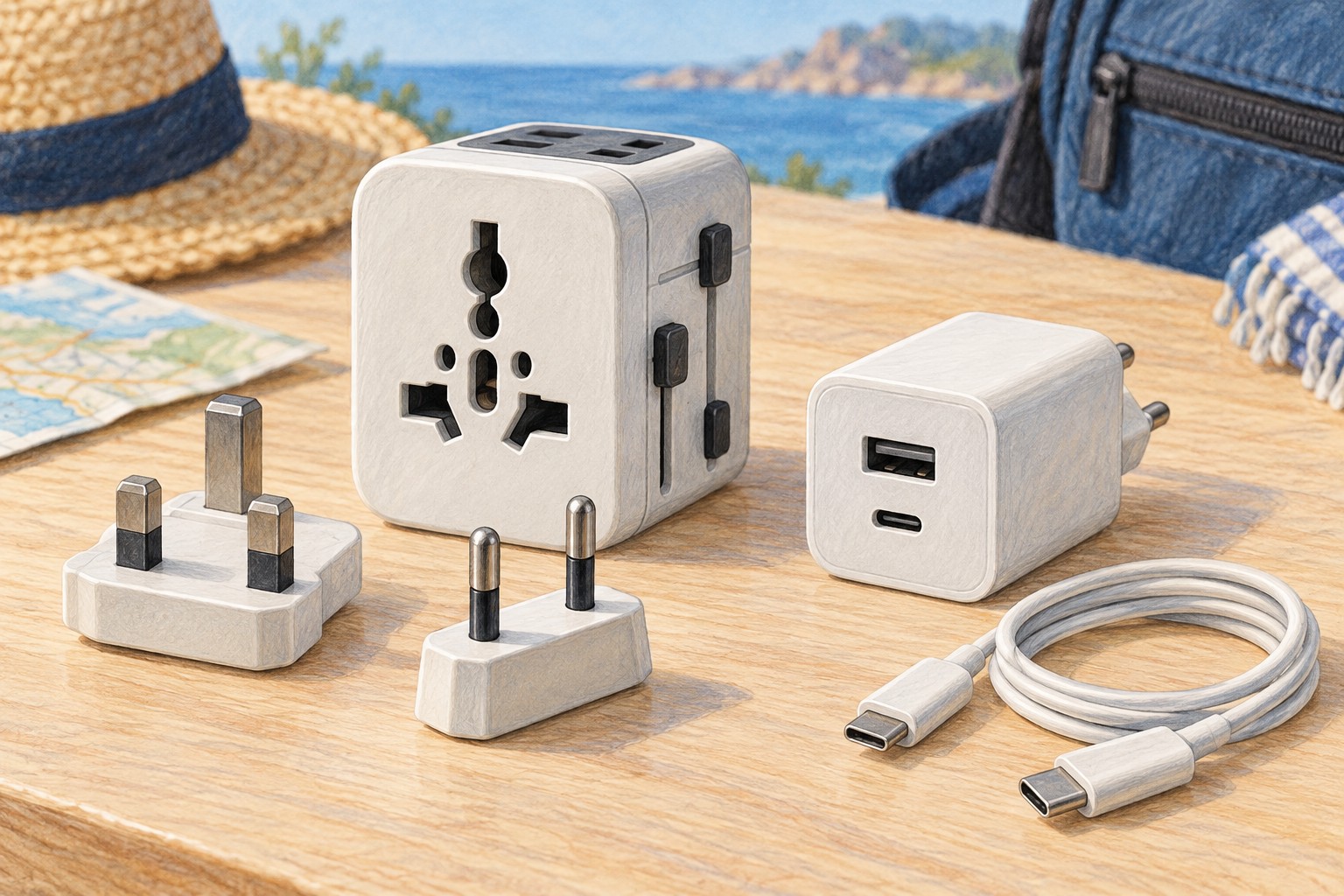
Separate three different functions
A simple travel adapter changes the physical connection between a plug and a socket. It does not convert voltage or frequency. A charger supplies suitable output to a particular device or connection. A voltage converter is a separate technical solution again. Similar sales descriptions can obscure those differences, so the information on the actual product matters.
Read the label on your existing power supply first. It states the permitted input values. Compare these with the supply at your destination and check the socket type separately. If a device is incompatible with the local supply, a physically fitting adapter is not enough. Where specifications are unclear, manufacturer advice is more useful than a set containing the largest possible number of plug attachments.
Account for connections and load
Check whether any required earth connection is maintained. Not every compact adapter supports equipment that needs an earth. Its permitted load must also suit the appliance. Electrical Safety First explicitly highlights these distinctions. Do not automatically transfer a country-specific standard mentioned in its guidance to purchases in another market.
A USB charger with several ports may share its output between them. The prominent total number on the packaging is therefore not necessarily available from each individual port. Read the simultaneous-use table and supported charging protocols. Check cables too: identical connector shapes do not necessarily mean identical power or data capabilities.
Try the complete kit at home
Connect the intended devices and charge them with the new accessories before travelling. Ensure plugs fit securely and nothing is under mechanical strain. Heavy combinations of several parts connected in series can be awkward in a poorly positioned wall socket. Replace improvised chains of adapters with equipment intended for the task.
Pack only the attachments and cables relevant to the actual route. A small cable label may help distinguish similar connections later. Inspect visible damage before each trip and stop using damaged components. A particularly tiny or inexpensive accessory offers little benefit if its markings are unreadable or its operation is unclear.
For a journey covering several countries, note where a different plug connection is needed. Hotel USB ports may be convenient, but they should not be your only planned charging method. Bringing suitable components of your own makes the arrangement easier to understand and more predictable when you arrive.
For a concrete trial, write a short connection list: phone on port one, camera battery on its own charger and headphones afterwards. If two devices are needed simultaneously, test that exact combination. An indication that both are charging does not establish whether charging time fits the stay. Allow enough time to observe the routine while following manufacturer instructions.
With several travellers, clear assignment helps prevent accidental swaps. Discreetly identify similar-looking power supplies and note which belongs to the shared kit. Share one charger only where timing works. Otherwise a single unit can become a bottleneck when everybody wants to charge immediately before departure, undoing the apparent packing advantage.