Choosing a weekend backpack for trains and cities
A weekend backpack does not need to be especially large. What matters is how it carries your actual belongings between home, the platform and your accommodation.
Let the journey determine the design
Picture the arrival day: a walk to the bus stop, station stairs, a narrow train aisle and perhaps cobbled streets at the destination. A backpack leaves your hands free but puts the whole load on your body. If carrying that load is uncomfortable, reducing the contents or choosing wheeled luggage may help more than adding straps to an overloaded pack.
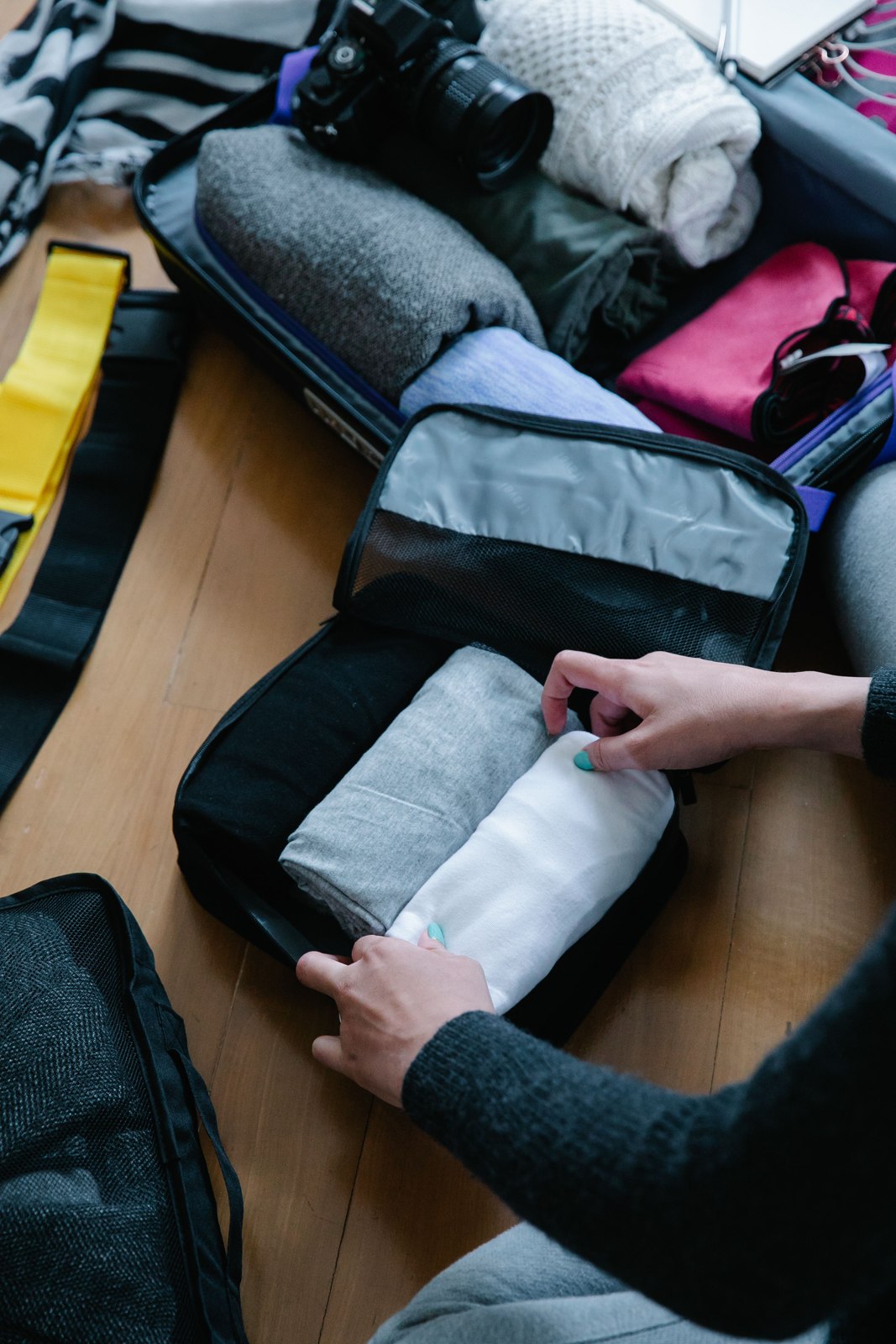
Before shopping, arrange your clothes, wash bag, shoes and electronics on a table. You can then see whether a second pair of shoes or numerous small accessories account for the space. A capacity in litres does not describe the usable shape. A narrow main compartment might accommodate a rigid wash bag less easily than a shorter, wider design. Avoid counting the same apparent space twice when comparing projecting pockets with the main compartment.
Try it with a realistic load
Try the pack with representative weight and the jacket you expect to wear. Adjust the shoulder straps and walk for several minutes instead of only standing in front of a mirror. Notice whether the lower edge bumps your back, the straps rub your neck or the weight pulls you backwards. These observations tell you more than a general recommendation based on your height alone.
A hip belt can transfer weight when it is part of a suitable carrying system. A narrow webbing strap may mainly steady the bag. Ask what the particular design is intended to do instead of treating both as equivalent. The chest strap should not restrict breathing or movement. Loose strap ends should have somewhere to tuck away so they do not catch on seats or other luggage as you board.
Access on the train, organisation at the hotel
For a rail journey, keep a ticket, water and a light extra layer accessible without completely opening the main compartment. That does not mean leaving valuables exposed in an open outer pocket. Test the zips with the backpack resting on a chair: can you reach the intended compartment without spilling items from another section?
A front panel that opens widely makes packing easier at your accommodation, but it needs room on a bed or luggage stand. A top-opening compartment may provide quicker access while travelling, although you must think more carefully about packing order. A separate laptop compartment earns its space only when a suitable device is coming with you. Otherwise its padding and dividers occupy part of the interior for no particular benefit.
The final buying checks
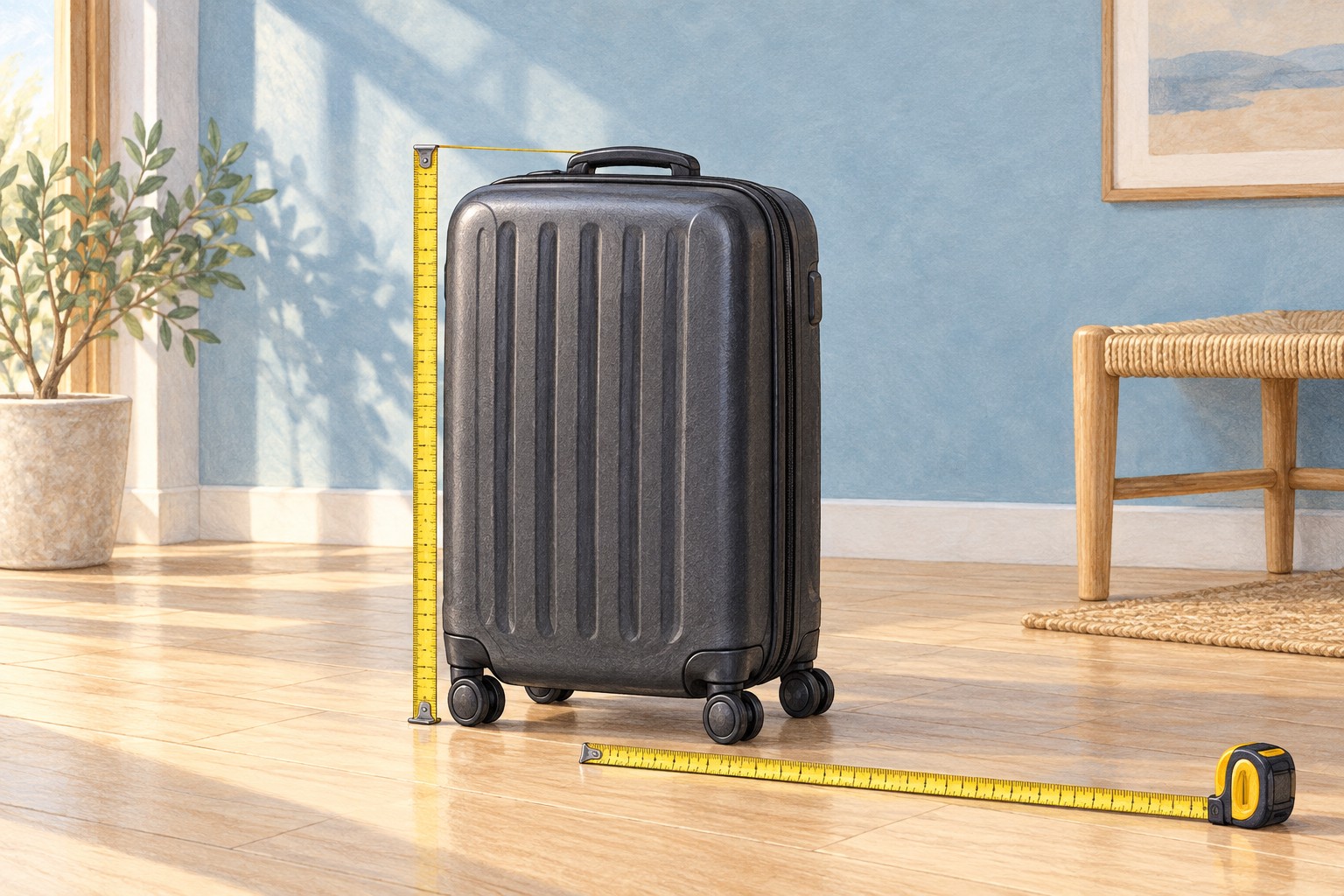
Measure the filled backpack, including bulging external pockets. A carry-on description does not replace checking the conditions of any flight on your itinerary. On a train, the bag must also be stored without obstructing aisles. A side handle can help when moving it into storage, provided that handle is intended for the packed weight.
Finally compare empty weight, cleaning instructions and access to replacement parts. More pockets are not automatically useful if you subsequently have to search all of them. For a weekend, a straightforward pack you can comfortably carry and open without assistance often makes more sense than a model full of features you will never use.
For example, compare two packs of similar capacity using a complete weekend kit: two tops, underwear, a wash bag and the electronics actually needed. One model may leave a long clear clothing section while the other divides space into several small rigid areas. Pack both fully, then remove only the wash bag. This does not identify a universally superior model; it reveals which arrangement suits those belongings.
Repeat with the jacket inside, even if you expect to wear it when leaving. If the pack now closes only under strain, it lacks room for changes during the day. Remove an unnecessary item before automatically moving to the next size. That keeps the decision tied to your real load rather than an attractive empty compartment in a shop.