Cabin suitcases: dimensions, wheels and usable space
A suitcase sold as cabin luggage may still be unsuitable for your booking. Establish which bag you are allowed to take before comparing features and interior space.
Start with the booking
Distinguish between a small bag for the space under the seat and a larger suitcase for the overhead compartment. The included pieces depend on the operator and your particular booking. A product name such as cabin trolley does not settle that question. Check every flight segment, especially when different airlines are involved.
Write down the permitted external dimensions, weight and number of pieces from the current conditions. Lufthansa, for example, maintains a dedicated carry-on page with size and carriage information. Do not apply one airline's figures to another airline. Your chosen luggage combination also needs to fit the return journey.
Allow for the possibility of a case being taken at the gate. Items you need during the journey, or items subject to special carriage rules, should not be inaccessible at the bottom of the main compartment. Current requirements for batteries, for instance, belong in your travel preparation rather than being treated as a feature of the suitcase.
Measure outside and try packing inside
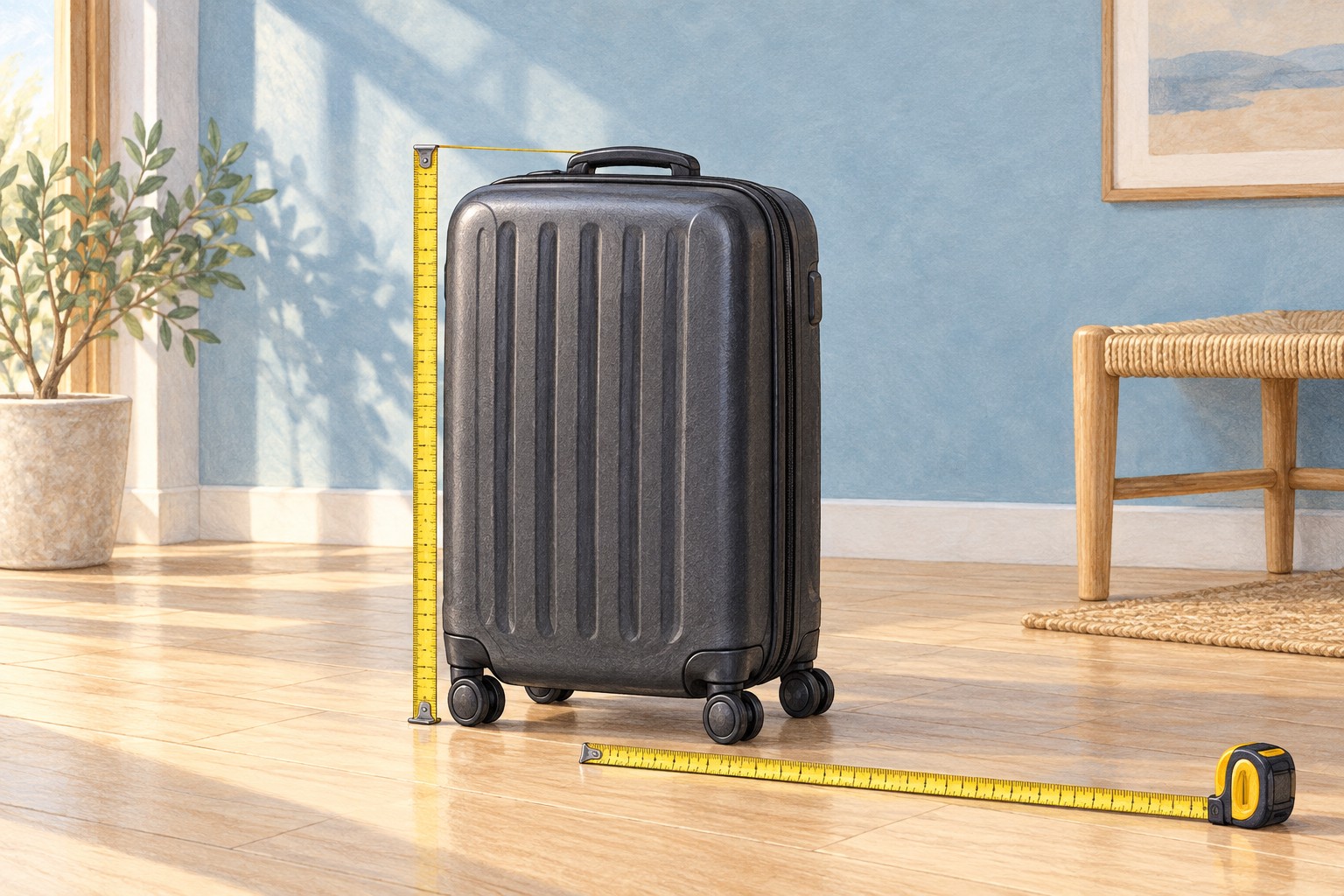
Measure the packed case at its outermost points. Wheels, fixed handles and filled exterior pockets can extend beyond the main shell. An expansion section creates more space but also changes the depth. Compare the condition in which you will actually travel with the permitted measurements.
Capacity in litres provides a broad comparison but does not explain usable space. Internal handle channels may divide the floor; two equal shell halves require a different packing arrangement from a deep main compartment with a lid. Try your usual clothes and wash bag inside if the retailer allows it.
Consider the empty weight. A heavier suitcase leaves less allowance for its contents when a weight limit applies. Calculate the complete bag rather than just your clothing: chargers, shoes and liquids change the result. Weighing at home adds a useful check, but it does not replace reading the conditions of your booking.
Assess wheels and handles against the actual journey
Four rotating wheels allow a case to move beside you on a level surface. Uneven paving may require a different technique. What matters is whether you can move the case along your route and carry it up a short flight of stairs yourself. A smooth shop floor does not fully represent a station forecourt.
Extend the handle and check that its height feels comfortable and its locking position secure. A side carrying handle can help with lifting, but it should also be easy to reach. Do not perform a load test that the retailer has not authorised. Instead, ask whether replacement wheels and handle parts are available for that exact model and how repairs are arranged.
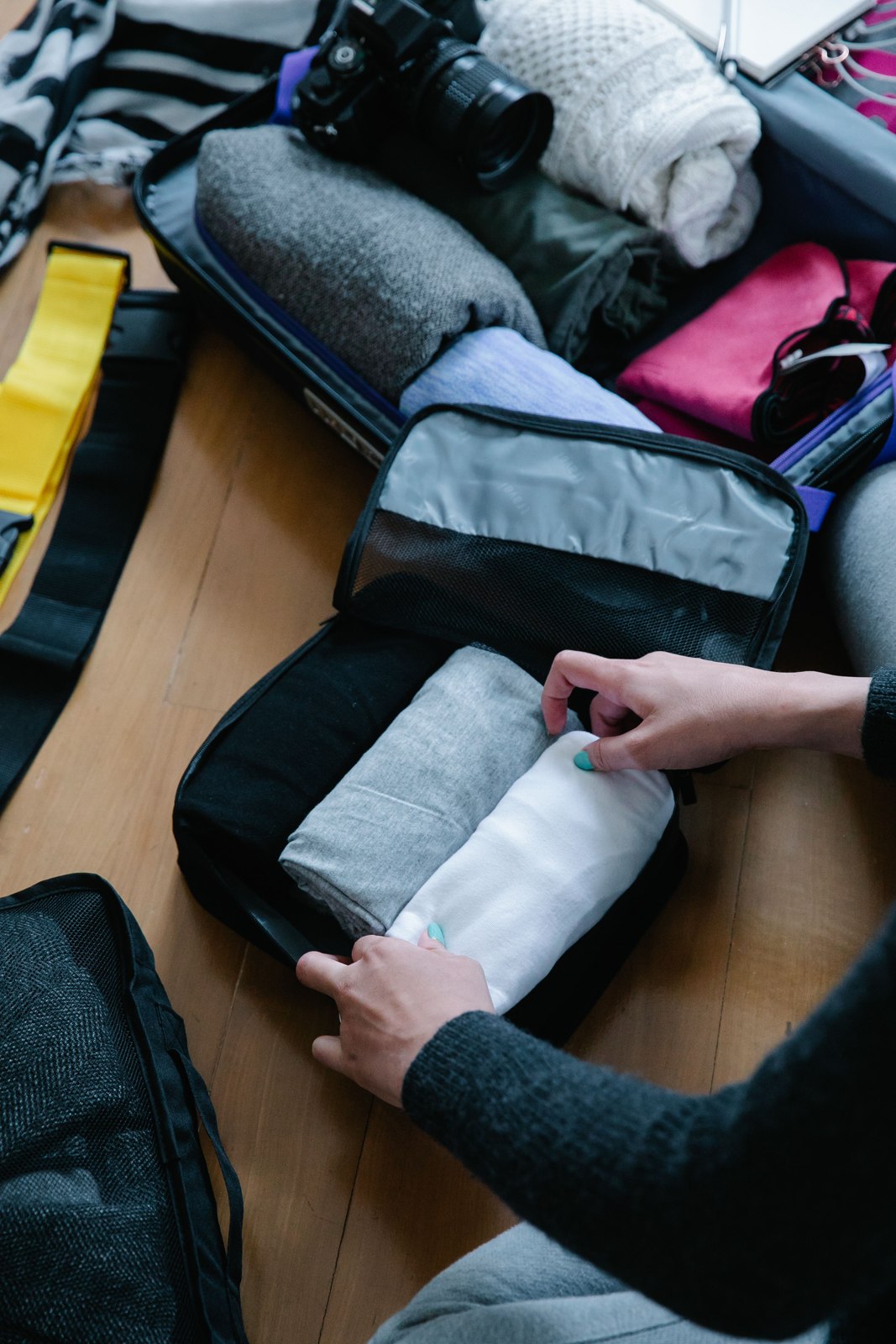
Finish with a short packing rehearsal. Can you close the compartment without forcing it? Are documents accessible? Can you carry the case if an escalator is unavailable? A slightly smaller model may be the better choice if it performs these jobs and meets the luggage conditions you have actually booked.