Travelling for several days with a small wardrobe
A small travel wardrobe needs workable combinations and a realistic change schedule. The number of items follows their use and care requirements rather than a rigid list for every journey.
Start with complete combinations
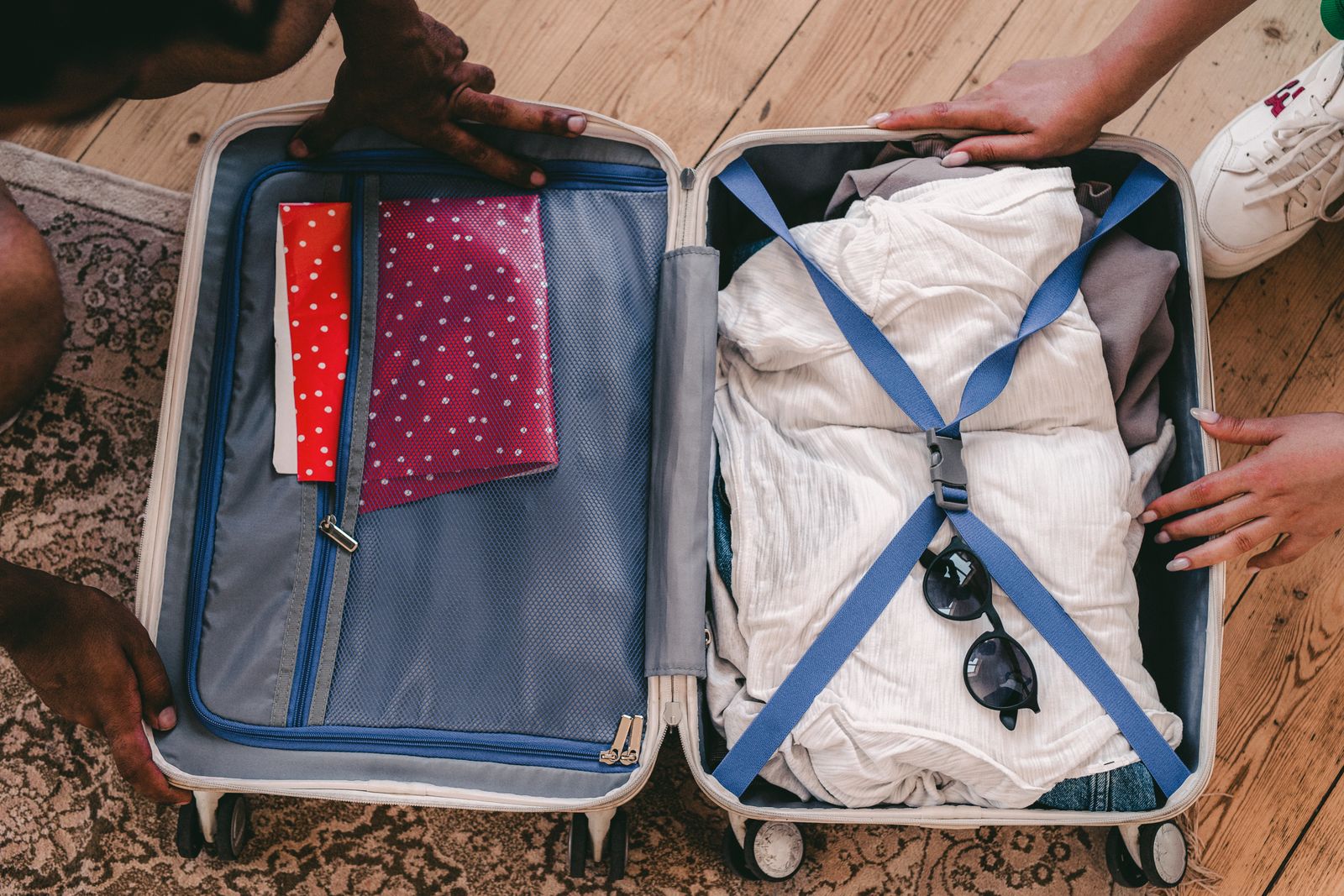
Lay out one outfit for an ordinary travel day. Add another for genuinely different requirements, such as a change in weather or a planned evening occasion. Then identify pieces that can move between them. Individual favourites do not save space if each needs its own trousers or special shoes.
Choose colours and shapes you already enjoy wearing together. Travel does not require an entirely new wardrobe. Try the combinations at home, including the jacket and footwear. You may discover that an extra layer restricts movement or a hem works only with shoes you are not taking.
Separate clothing for actual activities from an undefined just-in-case collection. A planned occasion may justify another item. Several complete evening outfits for one possible dinner are a deliberate quantity choice to weigh against the luggage you want to carry.
Plan rewearing and washing realistically
How often something can be worn depends on activity, weather, material and personal needs. Do not assume every garment will serve for several days. Underwear, heavily used clothing and delicate fabrics may have different change and care requirements.
If washing is part of the quantity calculation, establish where and when it will happen. A washable garment is of little help if it will not dry before the next departure. Read care labels and keep an outfit available during the laundry period. Your last clean trousers should not be in the machine with everything else.
Moving between several properties can make a small wardrobe more demanding than staying longer in one place. Put laundry into a section of the trip where you have enough time. This often helps more than buying miniature containers without identifying a suitable place to wash.
Count shoes and outer layers deliberately
Footwear occupies a substantial amount of space. Consider whether an existing pair that is comfortable for you covers the intended routes and occasions. If a second pair is necessary, give it a clear role. Avoid buying untested shoes solely because they pack into a small space.
An outer layer should suit the expected conditions and the clothing worn beneath it. Test the combination as a whole before packing. Finally, arrange the bag so clean and worn items remain distinguishable. A compact wardrobe loses its advantage if you can no longer tell which garments are ready to wear.