Rain jacket or umbrella for a city trip
For a city trip, a rain jacket and an umbrella are not interchangeable solutions. Their main differences concern free hands, wind and what actually stays covered.
Let the planned journeys decide
A compact umbrella may be enough for short walks between a stop, a café and a museum. It opens quickly without requiring another clothing layer. Once you are pulling luggage, pushing a buggy or handling a map, however, the occupied hand becomes a drawback. Consider not only the likelihood of rain but also the tasks taking place at the same time.
A rain jacket stays on your body and leaves both hands available. Its hood should adjust so that it follows your head when you turn without unnecessarily restricting your view. Try it over the mid-layer you expect to wear. A jacket that only fits over a thin T-shirt may be too tight on a cooler evening.
When travelling together, consider umbrella width on narrow pavements too. A large umbrella may cover two people but makes coordinated pace and passing others more important. Two small umbrellas occupy a hand each and later require two storage places. Jackets can instead involve repeated dressing and undressing when moving through crowded interiors. Compare those actions during an ordinary rainy outing at home before letting the smallest packed size decide the purchase. The convenient choice is the one that matches the way your group actually moves.
Protection involves more than the outer surface
On a jacket, inspect fastenings, cuffs and pocket openings. A wet outside pocket is not a suitable place for sensitive electronics. Length affects how much of the remaining clothing is covered, while your backpack remains a separate issue. Interpret water-repellent and waterproof descriptions through the specific product information.
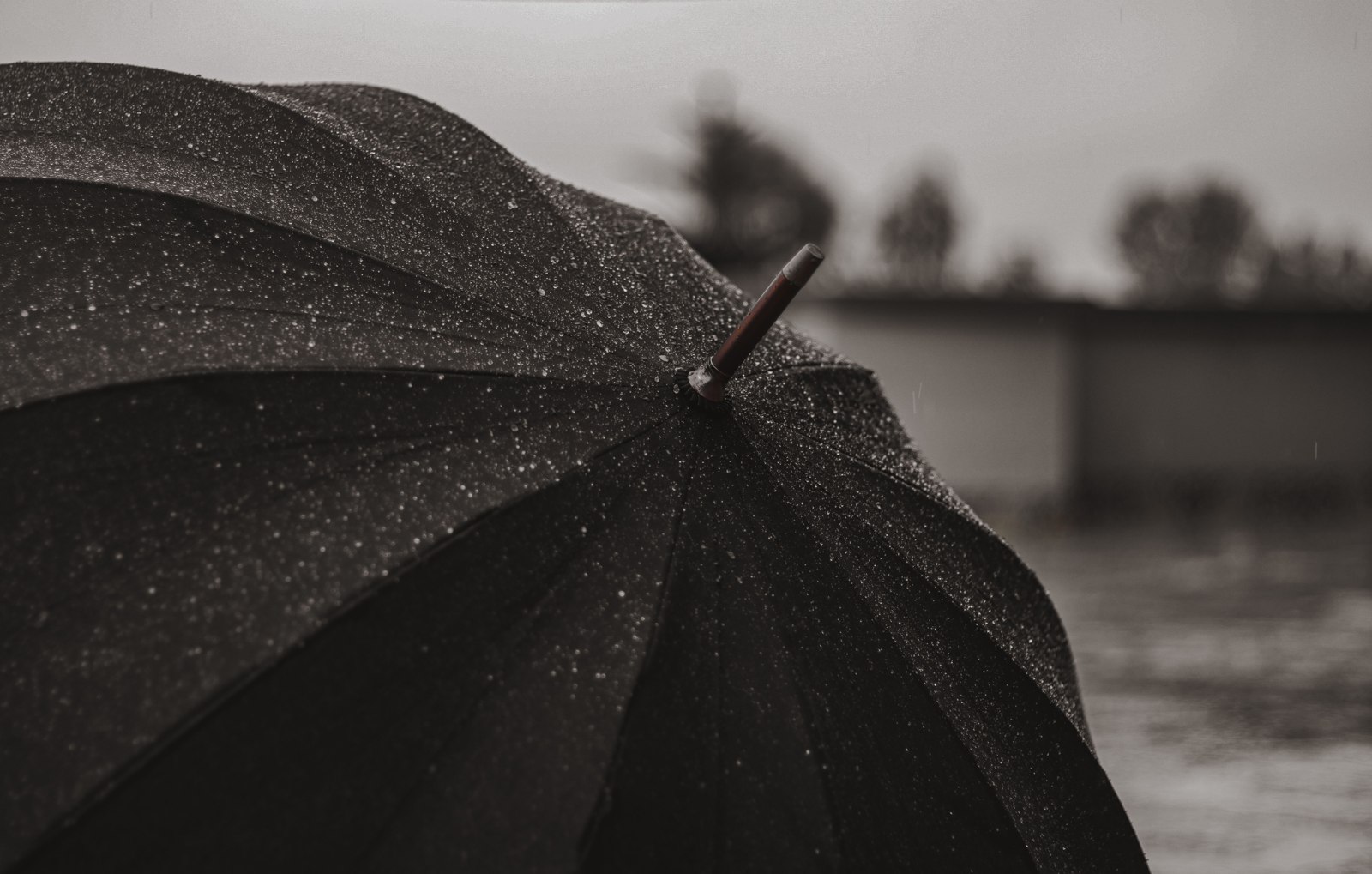
For an umbrella, examine the handle, opening mechanism and its size when packed wet. Check whether you can close it without excessive effort. Strong wind can make an umbrella impractical, and it never replaces attention to weather warnings. A storm-resistant marketing description is not a reason to disregard dangerous conditions or continue along exposed routes.
Store wet gear briefly, then dry it
Decide where wet equipment will go. An umbrella in its tight original sleeve can introduce water beside clothing; a temporary separate cover must be opened again later. A rain jacket should not remain rolled up damp for days either. Being able to hang both items at your accommodation is part of a workable routine.
On a changeable trip, a light jacket and a small umbrella can serve different purposes. That does not make both essential on every journey. Someone walking long distances with luggage will choose differently from a person making brief trips without a bag. Check the forecast before departure and identify an indoor alternative rather than trying to make every outdoor plan possible through additional equipment alone.