Planning a touring holiday without changing hotels daily
A touring holiday does not need a different hotel every evening. Several excursions from a small number of bases can reduce packing, provided those bases suit the actual connections.
Group excursions by their location
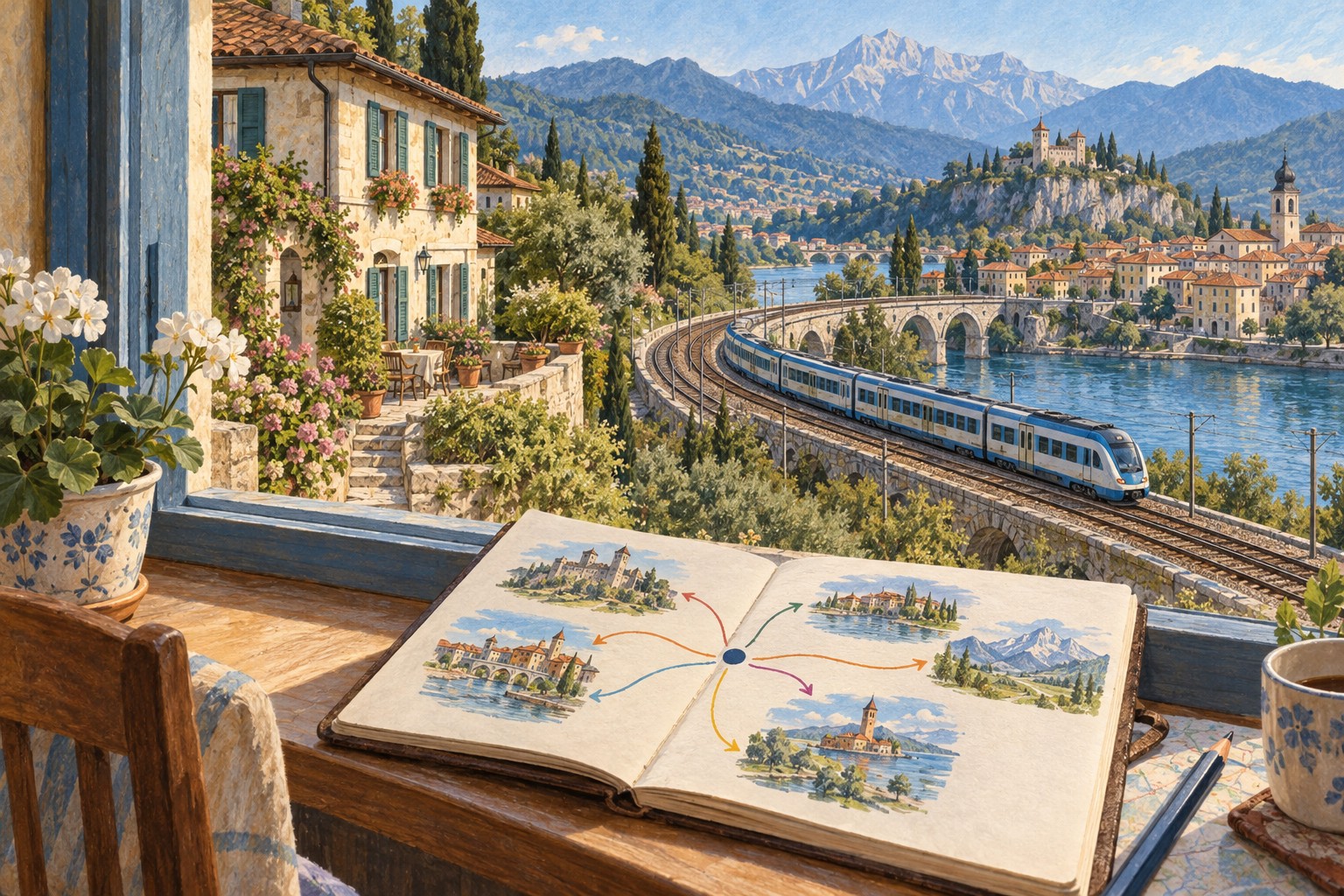
First place the destinations you want to visit on a map. Look for clusters that can be reached from one base. The point in the middle is not automatically the best choice: a station with useful direct services may work better than a geographical midpoint without suitable connections.
Check the return as well as the outward journey for each excursion. An attractive morning departure is insufficient if returning requires a lengthy detour. Include the route between accommodation and station or parking area. You will repeat that part on several excursion days.
Reduce the radius when too much of each outing would be spent travelling. A distant major destination may justify a second base instead of repeated long returns to the first hotel. Let accommodation changes follow the journey rather than imposing an identical number of nights everywhere.
Compare two different ways to use a base
In a hub arrangement, the main luggage stays in one place and you return every evening. This suits several destinations with useful connections in different directions. You become familiar with the accommodation’s surroundings and do not need to reorganise breakfast, shopping and the final walk home each day.
With two or three longer stays, the centre of the trip moves gradually onward. This can suit a journey with a clear direction. You avoid returning over ground already covered while still having several days without packing again.
Compare the approaches through a real sample day. How many hours remain at the destination after leaving the accommodation in the morning and returning at night? A base with a lower room rate may consume more time and additional fares through lengthy daily transfers.
Assess the accommodation as a repeated starting point
Over several nights, details become important that may barely matter during a brief stop. Is there space for open luggage? Can wet clothes or shoes be stored sensibly? Can you leave early without finding the only exit locked? Ask about specific arrangements when necessary.
Examine the neighbourhood for an evening without a major programme. Nearby food or suitable shopping can be valuable after several excursions. The accommodation need not be in the tourist centre; what matters is the ordinary routine you will repeat throughout this particular stay.
With a car, clarify repeated exits and re-entry and whether parking remains available on returning. With rail travel, a comprehensible walking route to the station matters more than a distance figure alone. A short route containing many stairs can become noticeable when repeated every day.
Plan moving days differently from excursion days
Changing accommodation involves checkout, luggage transport and gaining access to the next room. Do not give that day the same dense programme as one travelled with a light day bag. An intermediate visit can work when luggage storage and the onward journey are settled.
Pack a small travel-day bag before moving. Keep reservations and necessary belongings accessible so that the main suitcase can stay closed. This preserves the organisational benefit of a longer stay instead of losing it during an unnecessarily complicated transfer.
Leave an adaptable day within each base. Weather, an unusually absorbing museum or a preference for less activity can then be accommodated without rearranging further hotel bookings. Staying longer in one place is particularly useful when the flexibility it creates is genuinely available within the schedule.