Comparing rail journeys by travel time and changes
The fastest search result is not always the most comfortable journey. Compare the complete route, changes and the consequences of a missed connection together.
Compare door to door, not only station to station
For each option, record the journey from home to the departure station and from the arrival station to your accommodation. A faster long-distance train can lose its advantage when it finishes at a less convenient station. Where a city has several stations, the precise name matters.
Consider the time of day as well. An early train may require an additional taxi or overnight stay if local transport has not started. A late arrival may conflict with accommodation check-in. These consequences belong in the comparison even when they are absent from the displayed fare.
A simple table showing departure from home, train departure, train arrival and arrival at the room is enough. It reveals how much usable time the trip creates. Two services with identical train durations can look very different when viewed this way.
Distinguish the effort of each change
Changing on the same platform differs from crossing a large station with stairs and bags. Search results supply a time without always describing your personal effort. Investigate the station when a connection looks tight or particular requirements apply.
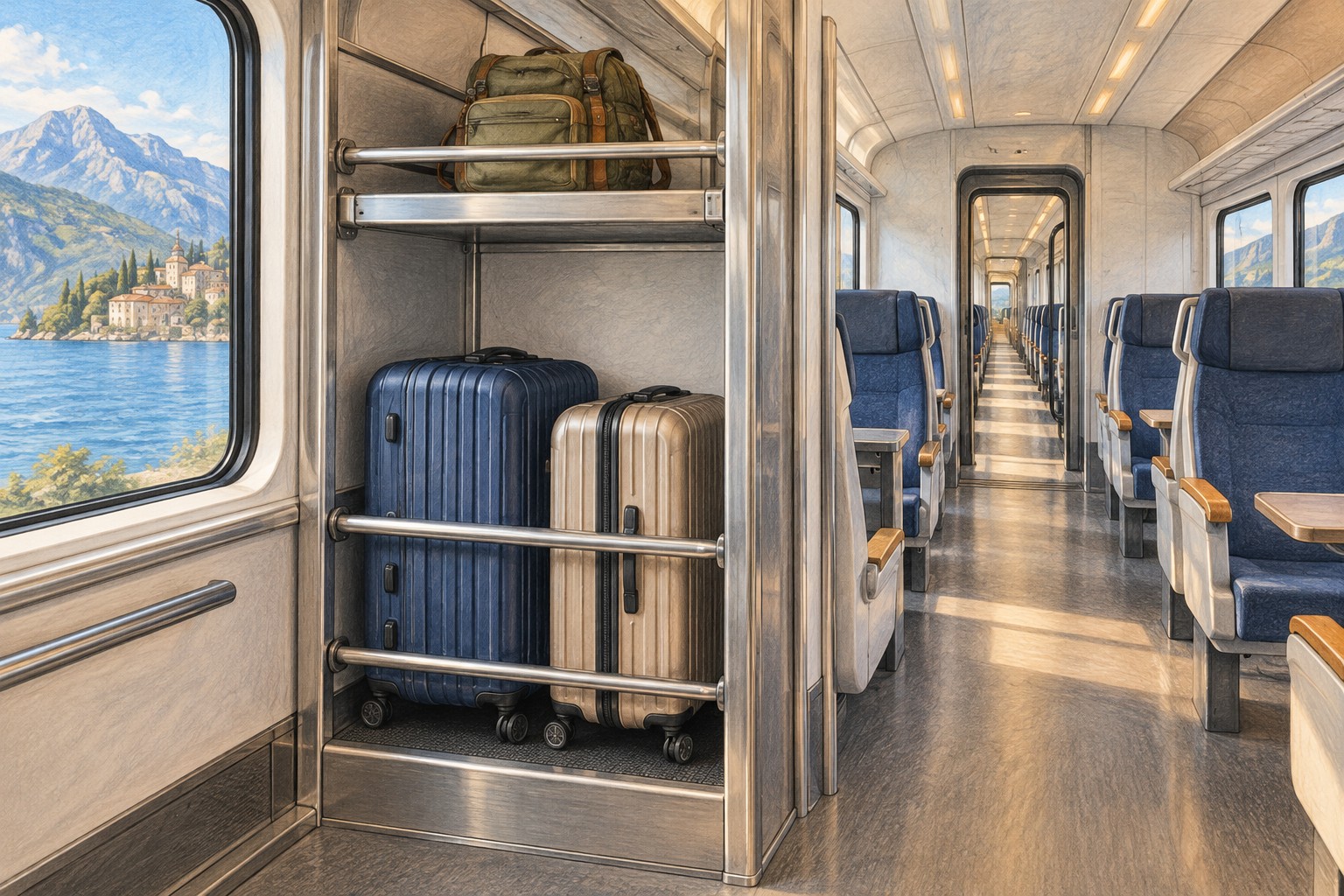
Consider the people and equipment travelling. A bicycle, pushchair or mobility aid can introduce different requirements. Large bags also affect transfers. Another half-hour on a direct train may be more comfortable than repeatedly leaving the train and stowing everything again.
DB journey search includes a setting for preferred transfer time. Use such options to reveal alternatives. Choosing extra time is a planning decision, not a guarantee that every connection will be made.
Examine where the changes occur
Two changes are not inevitably worse than one. Their position in the journey and the alternatives after disruption matter. A change early in the day with later departures available may be less sensitive than the final evening connection.
Look up a later service after the most critical change. This shows whether delay would produce a modest loss of time or a substantially different journey. It does not mean your existing ticket permits every alternative. Read carriage and fare conditions separately.
If separate tickets are needed, record that distinction. A route displayed together is not automatically one contract. Ask the seller how the specific combination is treated before purchasing if uncertain.
Record price and flexibility separately
Beside the fare, note whether the ticket is tied to particular trains and what changes or cancellation are possible. A small saving may be unimportant if your departure time is uncertain. Equally, the most flexible fare is not automatically necessary when your timing is fixed and the conditions suit it.
Include required reservations and additional feeder journeys. Check that all travellers and wanted services are selected. A one-person search cannot simply be assumed to represent a group.
Avoid inventing a precise overall score for every option. Make the meaningful differences visible: total time, transfer effort, latest arrival and the amount actually payable.
Choose one priority for this trip
Decide what matters most on this occasion. Earlier arrival may matter for a short weekend, while a direct service may matter more with heavy luggage. For a fixed evening appointment, an earlier train with a margin can be preferable to the last theoretically suitable option.
After buying, save the actual booking and recheck the journey before travelling. Search results, tickets and seat reservations serve different functions. If the timetable changes, reassess the entire chain to the accommodation rather than only the train’s arrival time.