Keeping train luggage accessible and secure
Train luggage needs to be stored without obstructing movement while keeping essentials reachable. The arrangement begins before you reach the platform.
Separate the main bag from journey essentials
Keep the ticket, any required identification, charging items and things needed during the ride in a small accessible bag. The large case can then remain closed, which is especially helpful when it is not beside your seat.
Check that you can handle each item yourself. A bag requiring two people to lift makes boarding and changes harder. DB luggage guidance includes safe storage considerations; read the specific rules for unusual items.
Loose straps and objects attached outside can interfere with stowing. Arrange them before boarding. One properly closed case is easier to move than several loose shopping bags, even when total weight is similar.
Use a suitable storage place in the carriage
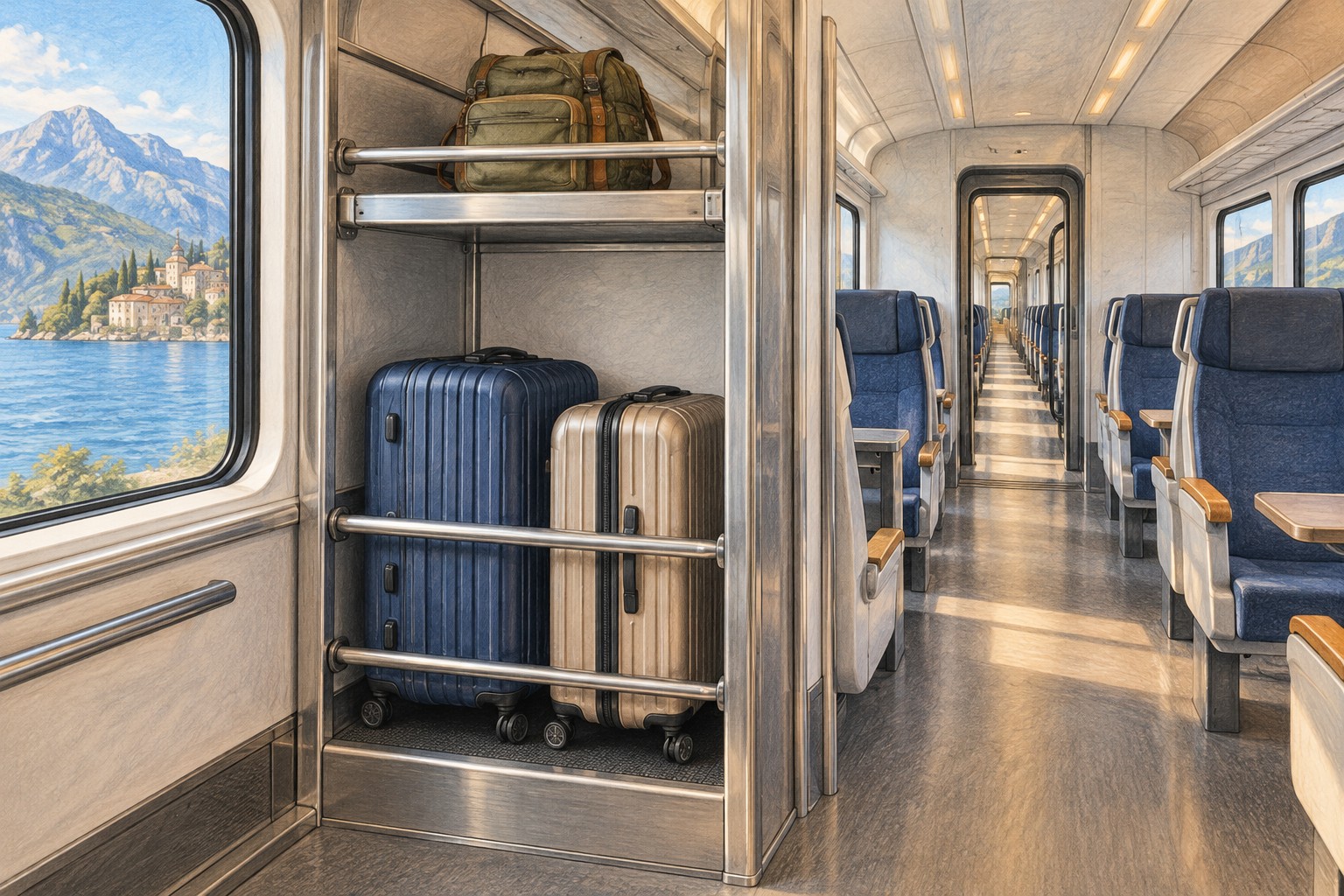
Use designated spaces according to the bag’s shape and weight. Aisles, doors and safety-related areas must remain clear. An empty seat is not automatically luggage storage when another passenger needs it.
Do not place heavy objects where movement could make them fall. Ask staff about an appropriate location if uncertain. Keeping a bag visible is useful, but does not justify unsafe or obstructive storage.
Keep particularly important personal belongings with you and remain attentive. Recognisable marking can reduce mix-ups. Avoid exposing unnecessary personal information on a tag; a distinctive feature and suitable contact method may be enough.
Prepare for leaving in good time
Before the destination, check which bags and small belongings are yours. Remember racks, charging sockets and the seat area. A brief look before standing can prevent leaving a phone or headphones.
Retrieve the main case early enough to avoid rushing through the carriage, without blocking the door long before the stop. Companions can divide tasks, with one gathering smaller items while another prepares the larger bag.
After leaving, check that everything is present before moving far away. If something is lost, a precise description and booking details help a report to the relevant operator. A pre-trip photograph can make the case easier to describe, but does not replace attention during travel.