Organising travel records after returning
After returning, travel records often sit across emails, downloads and paper receipts. A small closing routine makes unfinished tasks visible and separates personal booking information from ideas you may want to share.
Identify unfinished business first
Start with what still needs doing rather than designing an elaborate folder system. An outstanding refund, a disputed invoice and an unsettled shared expense belong on an active list. Record the provider, the latest message and your next action. A booking confirmation by itself rarely explains months later why a matter remains unresolved.
Keep the original files belonging to an open case together. These might include the confirmation, invoice and correspondence. Your own summary helps you understand the sequence but does not replace those documents. If deadlines or rights become relevant, check the applicable conditions and seek suitable advice where needed; a personal filing routine does not establish a universal legal retention period.
Move a completed matter into the archive after checking that the money has actually arrived or the agreed resolution has happened. A promised refund and a credited refund are different states. A short dated note prevents you from reopening the same question when you next tidy your files.
Separate memories from booking data
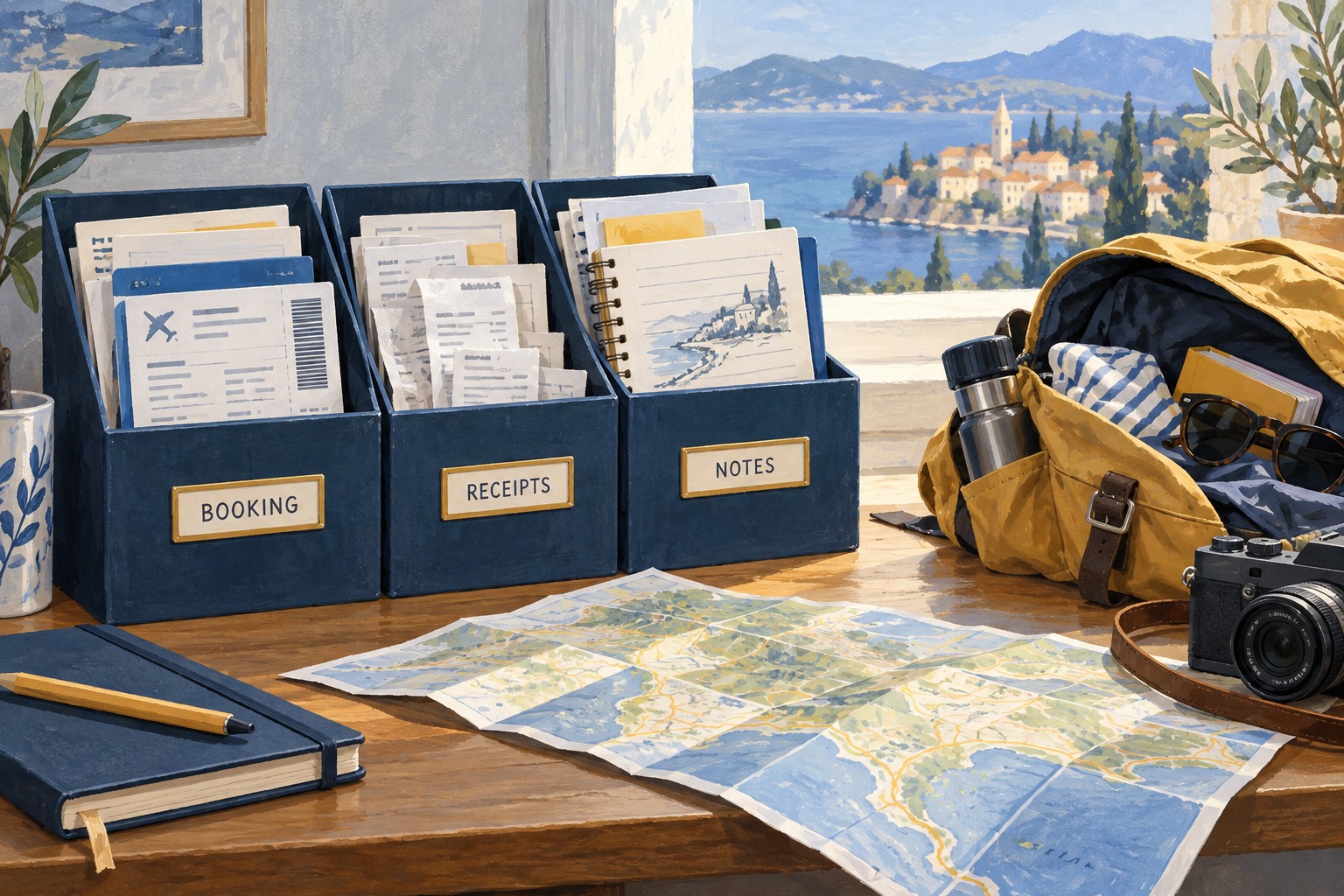
Store route ideas, restaurant notes and photographs separately from documents containing names, addresses or booking codes. An outing list you later send to friends does not need that personal information. Make a clean copy of the useful notes instead of sharing the entire travel folder.
A straightforward filename containing the trip date, place and document type is usually enough. Keep an identifiable main version and remove unnecessary local copies only after checking them. When moving files to another storage location, open a sample there. Seeing a filename does not prove that the document transferred completely.
For a group trip, agree who keeps the final expense calculation and who needs particular records. Do not collect copies of other people's identity documents just in case. Use access settings that can be withdrawn for shared files, and review old permissions when the organisational work is finished.
Carry forward useful observations
Record a few points for the next journey: which interchange was awkward, whether the accommodation location worked and which luggage pocket you used constantly. Date observations that may change. A connection or opening schedule that worked during your visit is a historical reference, not a permanent promise.
Finish with a clear separation between tasks, archives and reusable planning notes. On your next booking, you will not need to search every old email or reread resolved problems. The system is complete when essential documents are findable and each remaining task has an identifiable next action.