Night trains: comparing seats and sleeping accommodation
Seats, couchettes and sleepers answer different needs. Compare the actual accommodation and following morning as well as the fare when choosing a night train.
Read the category in full
A night-train ticket initially describes travel overnight, not necessarily a bed. Check the exact category and accommodation in the booking summary. Nightjet distinguishes seating, couchette and sleeping options, with the actual offer depending on train and route.
Read whether you are booking a place in a shared compartment or the whole compartment. A photograph of an empty room does not establish exclusive use by your group. Check the number of selected travellers too. Searching for one person may show different options from a joint booking.
If a particular berth, level or private compartment is essential, establish availability before purchasing. Preferences should not become supposedly automatic features of the category only after payment.
Judge seats and berths against the following day
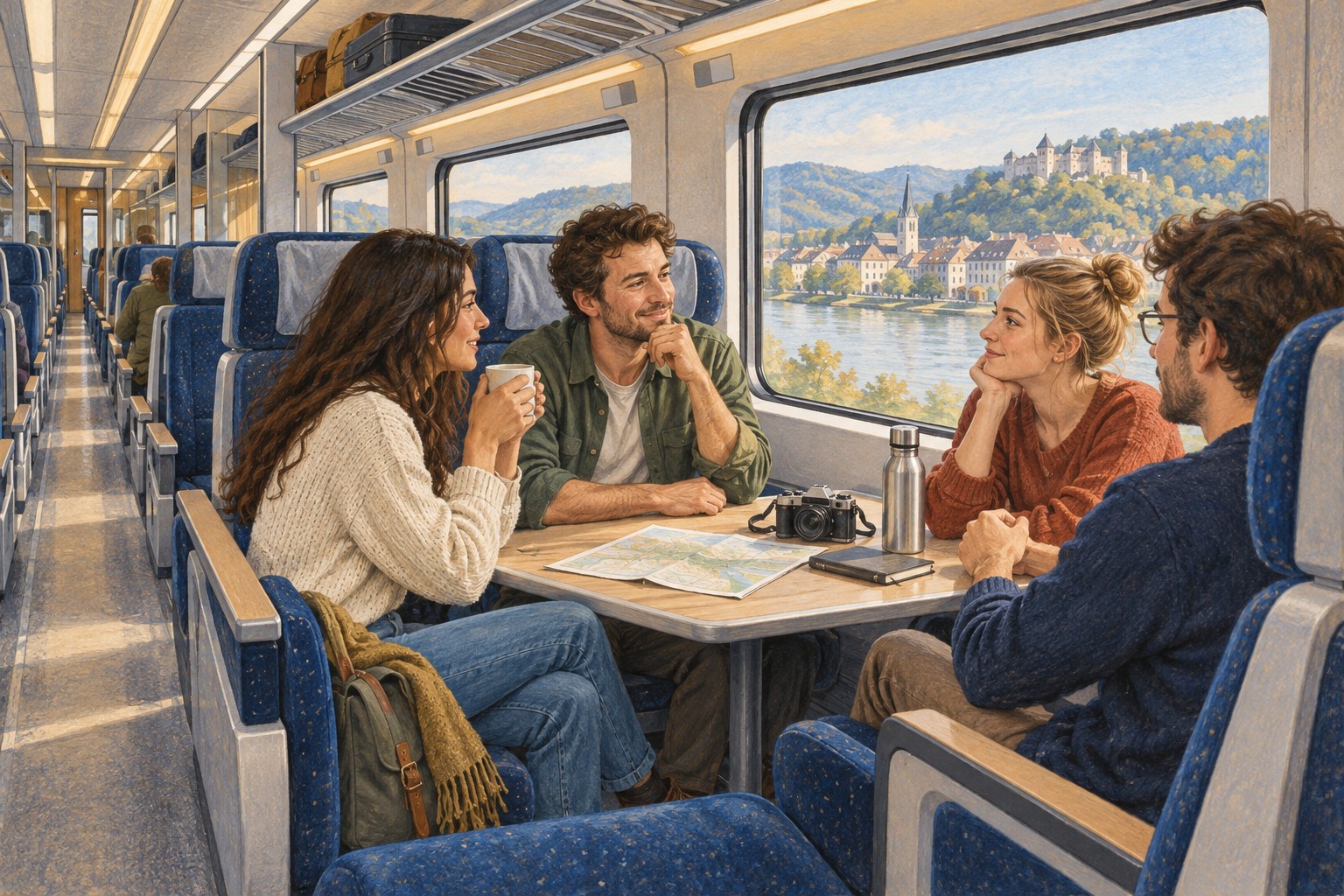
A seat may suit someone expecting limited sleep and a gentle day afterwards. The same choice may be unsuitable before an important early appointment. Weigh the saving against how you want to feel on arrival.
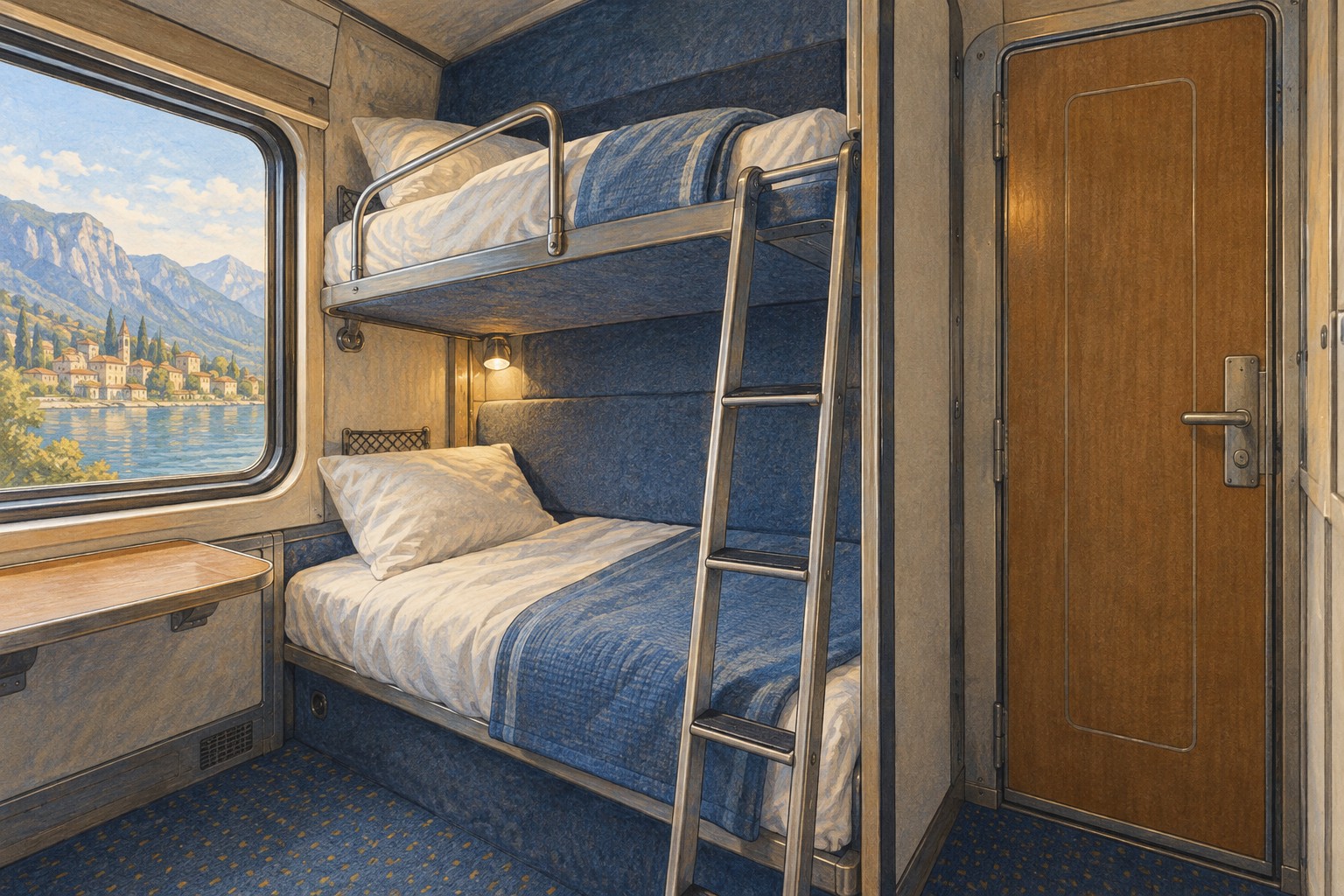
A couchette provides a different sleeping position without necessarily offering hotel-room privacy. Check occupancy and facilities. Questions about bedding, washing facilities and storage should be answered for the specific category.
A sleeping car may provide additional features, but offers differ here too. Read whether a wash area or shower is actually within the booked compartment or shared. A general category name does not replace the detailed description.
Pack a separate overnight bag
Place the night’s requirements in a smaller bag: suitable sleeping clothes, toiletries and whatever you need first in the morning. Keep the main case closed where possible. This makes a shared or confined space easier to use.
Pack to avoid prolonged searching or spreading several bags while others want to sleep. Headphones and considerate screen brightness can improve the shared experience. Store valuables and important documents where you can keep track of them.
On boarding, follow staff guidance and use the intended storage. A bag must not obstruct access or movement. Luggage too large for the selected accommodation can undermine the comfort benefit of the category.
Organise the early morning
An early arrival only creates a useful day when the hours before hotel access are considered. Establish luggage storage, breakfast and a suitable first activity. A long museum immediately after a disturbed night is not the best choice for everyone.
If another train follows, read the ticket combination and plan the connection carefully. Overnight services can also be delayed. Whether and how an alternative may be used depends on the specific conditions.
Contact the accommodation about early arrival with a precise question: can bags be left, and from what time? Merely sending your arrival time does not confirm early access to a room.
Compare the full cost with daytime travel
Do not compare the night train only with the cheapest daytime fare. Consider the complete arrangement, including a hotel night potentially avoided and time at the destination. Conversely, needing extra rest after the train may reduce the apparent time gain.
Check amendment and cancellation conditions for the exact offer. A more expensive accommodation category is not automatically more flexible. Save the booking with category, travellers and journey section so the agreed arrangement remains clear during boarding.