Layering clothing for changing temperatures
Clothing layers only help when you can combine and store them sensibly while travelling. On a city break, moving between outdoors, transport and indoor spaces is especially important.
Think in functions, not maximum item counts
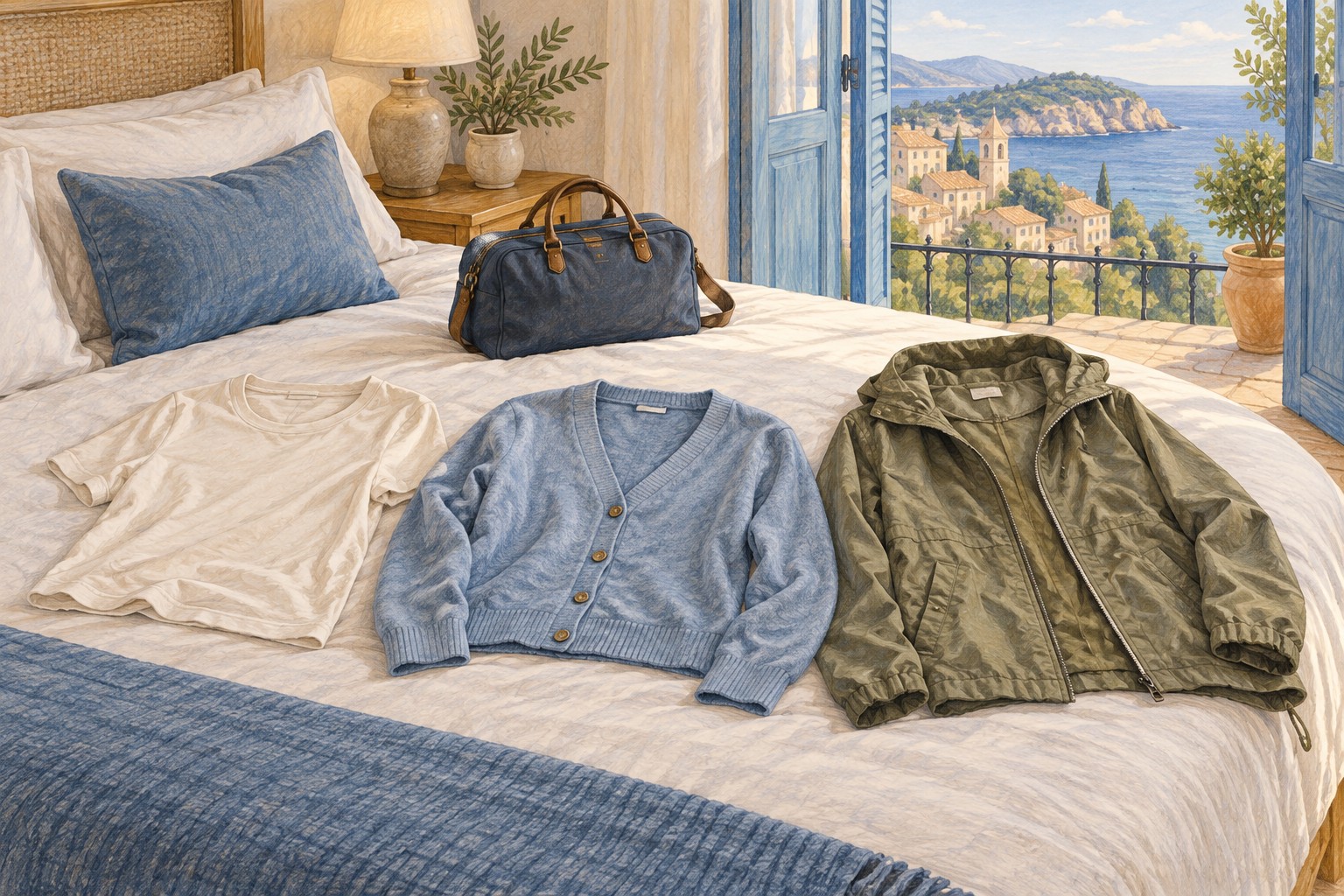
Start with a next-to-skin layer, an additional insulating layer and appropriate outer protection. This is a way of thinking rather than a requirement to wear three garments in every situation. One layer may be enough inside a warm museum, while a windy platform calls for another. REI separates the purposes of base, insulating and outer layers; that distinction can help create a manageable city wardrobe.
Place each proposed top beside the other pieces. A very thick layer may not fit under your jacket even when both are comfortable individually. Check shoulder and elbow movement and close all the fastenings. A garment that can only be worn open will perform differently in wind from what you may have expected.
Account for changes throughout the day
An example day begins with a cool walk to the station, continues inside a heated train and ends with several hours outdoors. Pack the additional layer where you can reach it without emptying your luggage. Whatever you wear in the morning must fit into your bag later. That reserve capacity is easily overlooked when making a packing list.
Small changes may be managed by opening a jacket or removing a scarf. Larger temperature differences require a layer you can take off completely. Complicated fastenings become inconvenient when you change several times a day. Practise the movement while seated if you expect long journeys on public transport.
Match materials and care to the trip
Read care information and consider how a damp or dirty garment will become usable again. Something that is difficult to dry in your accommodation needs a different role from a layer that is readily available again. Fibre names alone cannot predict every aspect of comfort or drying time; construction and thickness matter as well.
Avoid a wardrobe whose pieces work in only one precise combination. Two tops that both fit beneath the same additional layer offer more flexibility than several delicate individual outfits. One deliberately chosen garment may cover a special evening. The rest should support the activities that occupy most of your days.
Use the forecast while limiting duplication
Shortly before departure, check more than the daytime maximum. Look at the hours when you will actually be outside. Early departures and late waits may feel quite different from a sunny afternoon. Account for wind and rain too, and observe local warnings. Extra clothing does not automatically make extreme conditions manageable.
Afterwards, record which layer you frequently used, which remained unworn and why. Do not automatically remove every unused item next time: a justified weather reserve may still have been sensible. Look instead for duplication, where two garments served exactly the same purpose without both being needed.