Inspecting second-hand suitcases before buying
A second-hand suitcase can work well when condition, dimensions and repair options are clear. A low purchase price alone says little about the effort required before your next trip.

Identify the model on offer
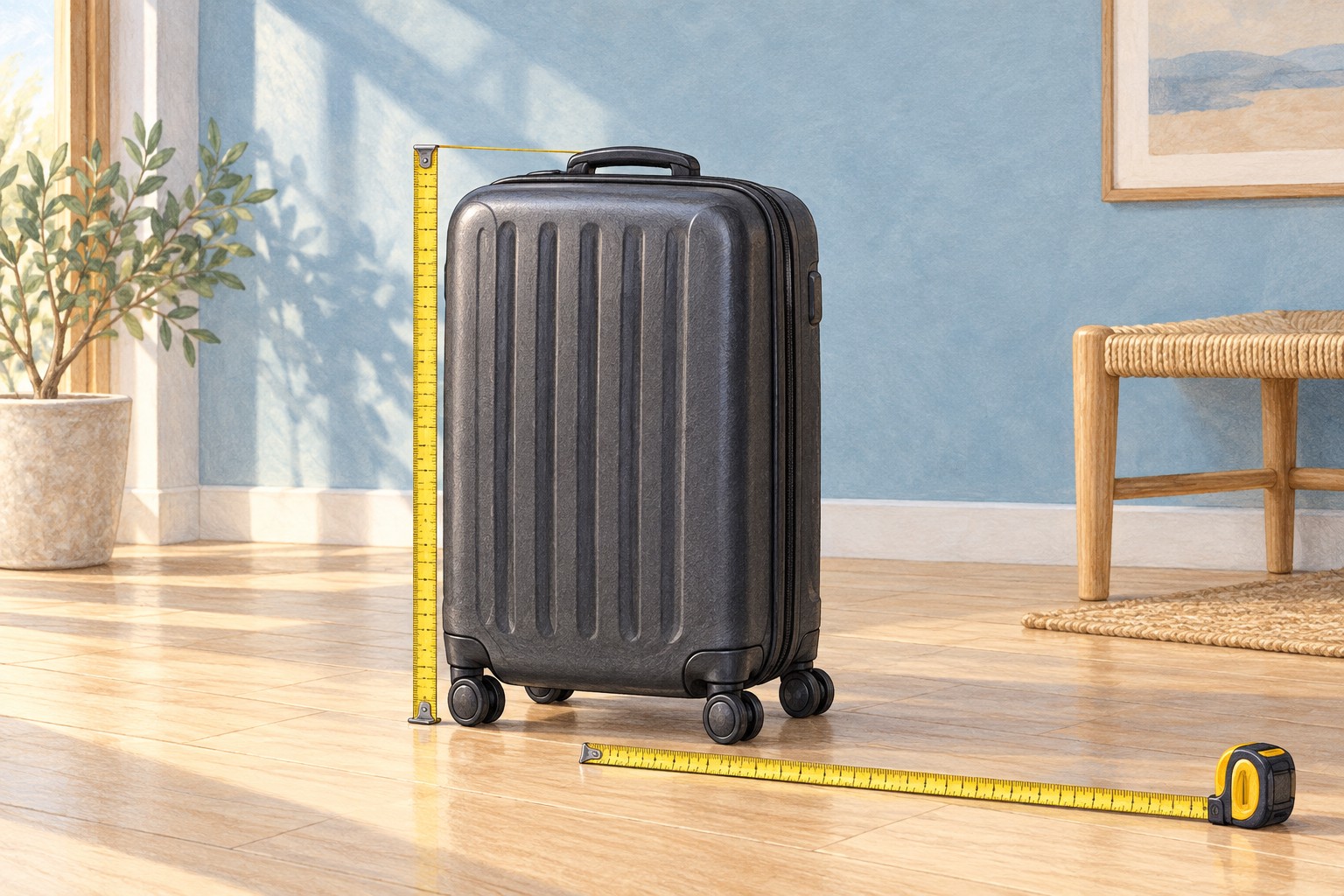
Ask for the model reference and photographs of the exterior, interior, wheels, handles and identification label. One image of a closed case does not show damaged lining or a sticking telescopic handle. Check actual external measurements including wheels and handles. An approximate size category is not an adequate substitute.
Ask about known damage and previous repairs. A replaced component need not rule out buying, but its history should be explainable. Check whether the maker still supplies suitable parts if further repair appears likely. A familiar brand name alone does not guarantee support for every older range.
Operate everything in person
Open and close all zips without force. Extend the handle through its intended positions and check that it locks into place. Roll the case in several directions and lift it using suitable handles. Do not automatically dismiss excessive movement or strong noises as ordinary wear.
Inspect corners, wheel mountings and handle areas for cracks or distortion. Look beneath movable inner covers where this can be done without damage. A clean-looking exterior may conceal moisture marks or loose internal fittings. Notice the smell of the opened luggage without assuming an unpleasant odour will be easy to remove.
If an in-person inspection is impossible, ask for a short recording of the actual case being operated. It can show handles and wheels without pretending to be a professional assessment. Ask questions that matter to your decision. A low price should not simply conceal uncertainty about essential features. A used suitcase of suitable dimensions and documented condition is easier to assess than an exceptionally cheap listing supported only by an old catalogue image. Decide whether the remaining uncertainty is acceptable before paying.
Compare total effort, not the bargain feeling
Add required parts, cleaning, transport and any workshop visit to the purchase price. If repair costs are unknown, comparison with an intact case remains uncertain. A low price can be sensible when the defect is manageable, but it can also simply transfer work to you.
For an existing lock, confirm that it opens reliably and can be reset according to its instructions. Do not buy a locked case assuming you will somehow gain access later. Establish the actual sale conditions as well, without treating a private transaction as a commercial retail purchase or the reverse.
Clean and dry purchased luggage appropriately for its material, then do a packing trial in good time. Only the intended load reveals whether its weight and interior layout genuinely suit your journey. Used luggage should fulfil the same practical tasks as new luggage rather than merely cost less.