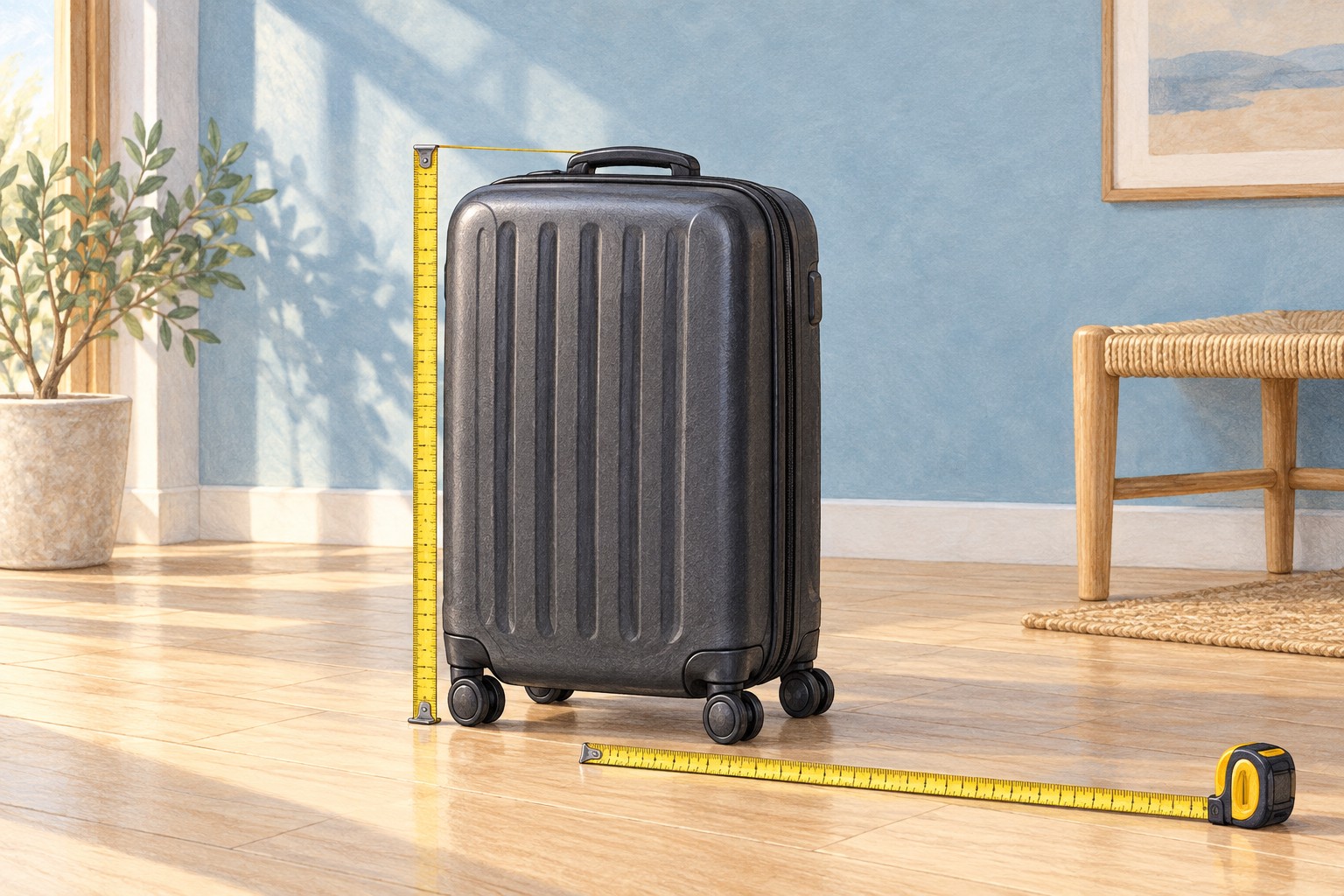
Cleaning and drying luggage after a trip
Give luggage a brief inspection and clean after travelling rather than immediately putting it away. Empty it first, assess its condition, clean according to material and let it dry completely.
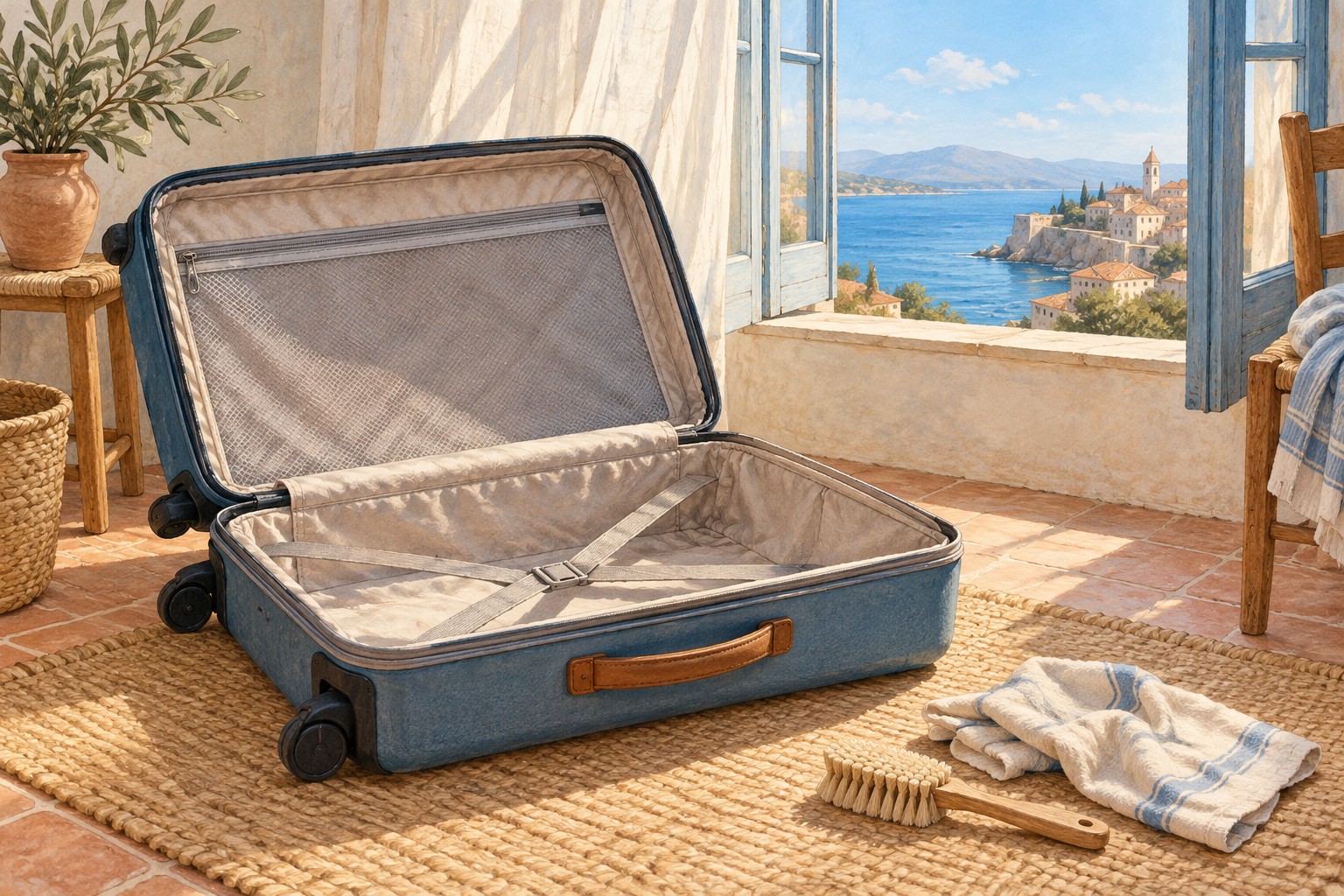
Empty every compartment and identify damage
Check small outer pockets, document sleeves and areas beneath removable inserts. Tickets, crumbs and damp textiles are easily overlooked there. Examine lining, zips, handles and wheels in good light. New damage should not disappear beneath cleaning before you have documented it for any relevant report.
Remove loose dirt carefully using a method suitable for the material. Do not force sand farther into wheels or zips by repeatedly operating them. If a wheel turns poorly, consult the care guidance or have it assessed. Not every noise is sensibly treated by applying an arbitrary lubricant.
Record an obvious defect with an overall view and a closer photograph before dismantling anything. Note when you noticed it without claiming a cause you do not know. If reporting it to a carrier or seller is appropriate, check the current procedure and any applicable deadlines promptly. Cleaning later may be sensible, but it should not accidentally alter the only clear evidence of the condition. This record supports your memory and communication; it does not promise that a claim will be accepted.
Treat different materials separately
Hard shells, textile exteriors, leather trim and lining can require different care. Use the instructions for the actual model. Samsonite's guidance, for example, distinguishes between luggage materials. A cleaning recommendation for a hard plastic case is not a universal procedure for a coated fabric backpack.
Where appropriate, test an explicitly suitable cleaning method in an inconspicuous area and use it sparingly. Avoid soaking the whole item unless the manufacturer permits it. Adhesives, coatings and hidden reinforcements may react differently from the visible surface. Strong chemicals or unfamiliar household remedies are not a sensible first response to one mark.
Dry before closing for storage
Leave the luggage open to dry in a suitable place. Lining corners and pockets need to be dry as well as the exterior. Strong heat can affect shape and materials, so follow drying instructions. A bag that feels dry outside may still hold moisture beneath padding or inserts.
Store it clean without unnecessary pressure on wheels and handles. Smaller bags stored inside must also be dry. Do not leave wet wipes or strongly scented products inside as a permanent solution. Address an unexplained smell by finding its cause rather than merely masking it.
Record necessary repairs immediately after the trip. A missing handle or sticking closure is easier to address with time available than just before another departure. This short storage inspection turns later preparation into a manageable check rather than an unexpected search for repairs.