Choosing document wallets for access and size
A document wallet keeps travel papers together. It should accommodate the originals and printouts you need without turning a quick check into a complete search.
Sort by frequency of access
First assemble only the documents actually required. A valid travel document, booking details and any additional evidence perform different functions. A copy does not automatically replace a required original. Establish what your route and personal circumstances require before selecting the wallet.
Place frequently needed items at the front and occasional documents separately. You should be able to retrieve a ticket without spreading every document across a public surface. For several travellers, clear grouping by person can help. Everyone should know who carries the wallet and how to reach their own papers.
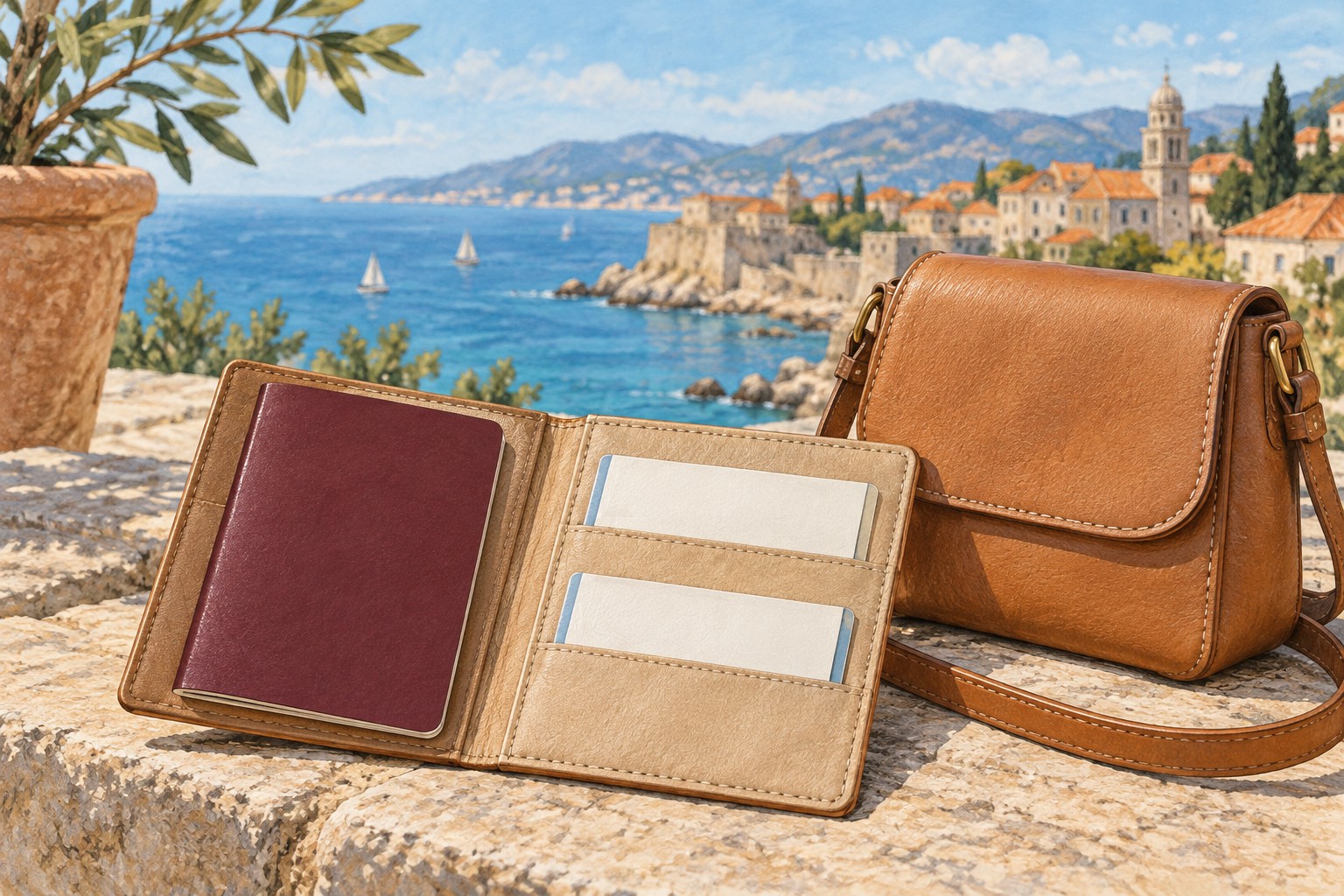
Test the wallet with the real formats. Some designs fit a passport but not an unfolded printout. Others are so large that they barely fit your personal bag. Fold important paperwork only where that does not interfere with its use. The necessary contents matter more than the largest advertised number of card slots.
If two people arrive separately, avoid placing the only copy of every check-in instruction with the later arrival. Give each person the information they need for their own journey while keeping sensitive details protected.
Organise without concentrating every backup
A shared wallet creates order but also puts important belongings in one place. Consider useful separate information backups, such as protected digital copies and independently recorded contact methods. Do not keep every possible access route alongside your phone in the same bag. Backup information needs to remain reachable in the failure situation it is meant to address.
Inspect the closure, seams and position within your bag. A zipped wallet limits papers slipping out but is not automatically waterproof or theft-proof. Assess claimed technical protection through specific information. For ordinary organisation, suitable size and clear access often matter more than additional marketing terms.
After travelling, remove old tickets and unnecessary printouts. Retain required receipts securely for their relevant purpose and do not discard sensitive documents openly. This keeps the wallet clear for the next departure and prevents current papers disappearing among souvenirs of previous journeys.