Checking replaceable wheels and handles before buying luggage
Wheels and handles are repeatedly moved and loaded during travel. Before buying luggage, establish whether the particular model has a clear repair route.
Look for model identification, not a general promise
Find the exact model name and any product number. A statement that spare parts are available may refer only to selected ranges. Ask whether wheels, carrying handles and telescopic components are supplied for this particular case. Keep the answer and purchase records so that later identification does not depend entirely on a blurred photograph.
Check whether the model reference can be found permanently inside the case. Labels attached only to disposable packaging are easily lost. A private photograph of the identification plate can help. Samsonite's service information, for example, asks for precise wheel-position identification; similar-looking parts are not necessarily interchangeable between sides.
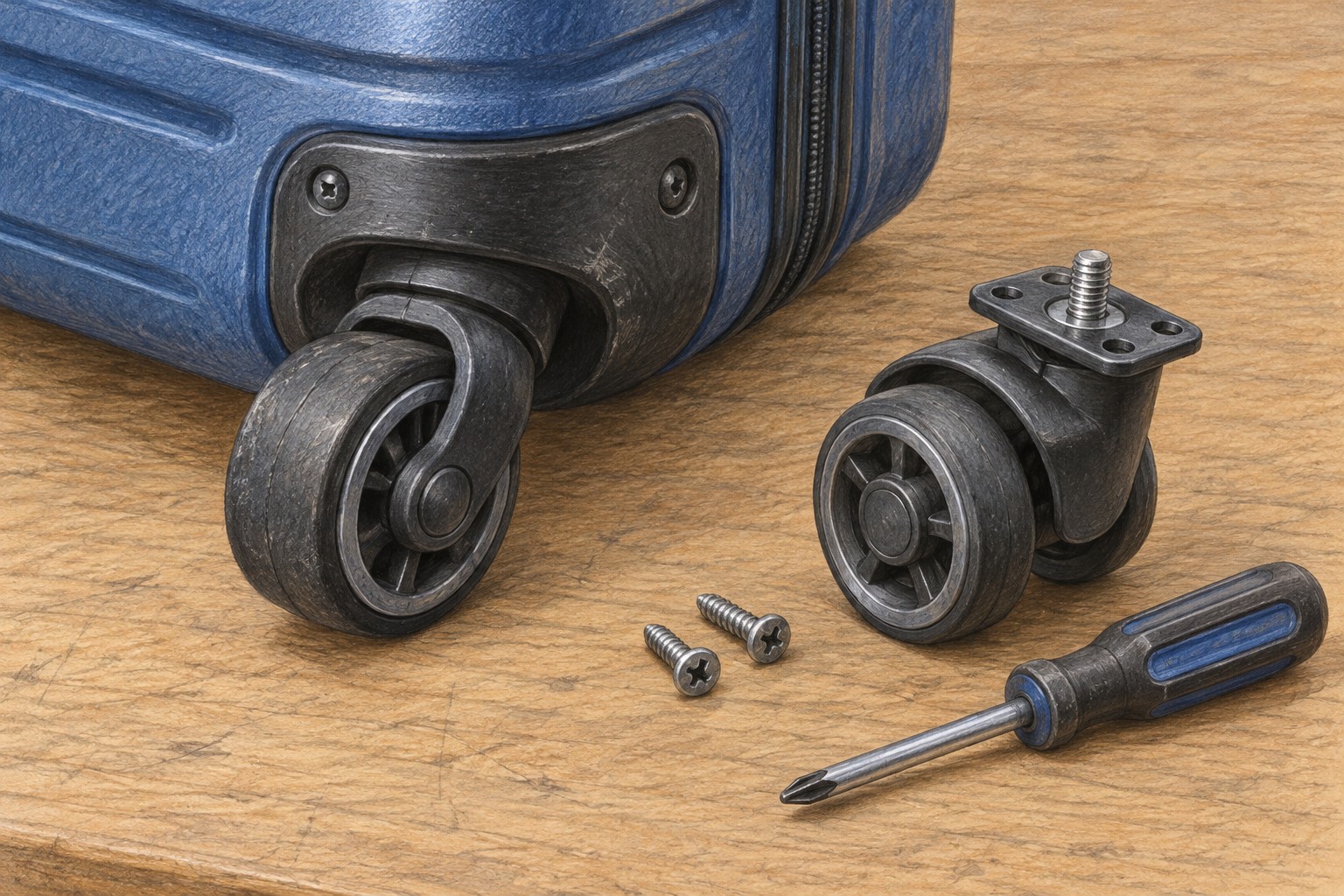
A visible screw does not guarantee an easy repair
A screwed-on wheel may look accessible while its internal mounting is hidden behind the lining. Ask about the intended repair method and whether the owner may replace the component or a service centre is required. Being able to remove a screw does not establish that you can correctly and securely install the replacement.
Inspect the surrounding shell as well. A replaceable wheel is of little help if its mounting area is badly damaged. For an online purchase, detailed photographs and a specific question may be more useful than a broad durability statement. A retailer cannot reasonably predict every future form of damage.
Include cost and inconvenience
Ask what a typical repair process involves: where the luggage goes, who arranges shipping and how an estimate is supplied. The aim is not to obtain a fixed price for every future repair. You want to understand whether the route is workable from where you live and whether transport costs change the value of a small replacement part.
Distinguish a warranty, a paid repair service and spare-part availability. Those terms do not promise the same thing. Read the conditions without assuming that a long warranty automatically covers wear or transport damage. Specific rights depend on applicable contractual and legal conditions; an advertising phrase does not replace checking them.
A useful question might be: for this exact model, if I later need a left rear wheel, is the wheel supplied separately or as a complete assembly, and how would it be ordered? That gives the provider something specific to answer. A general request to confirm repairability may otherwise produce an equally general assurance.
If a component can only be obtained through a service business, ask about a reachable location and the assessment process. Record whether the case must be sent empty and which documents are needed. These details allow a practical comparison between models without presenting future prices or delivery times as guaranteed facts.
Still try the suitcase now
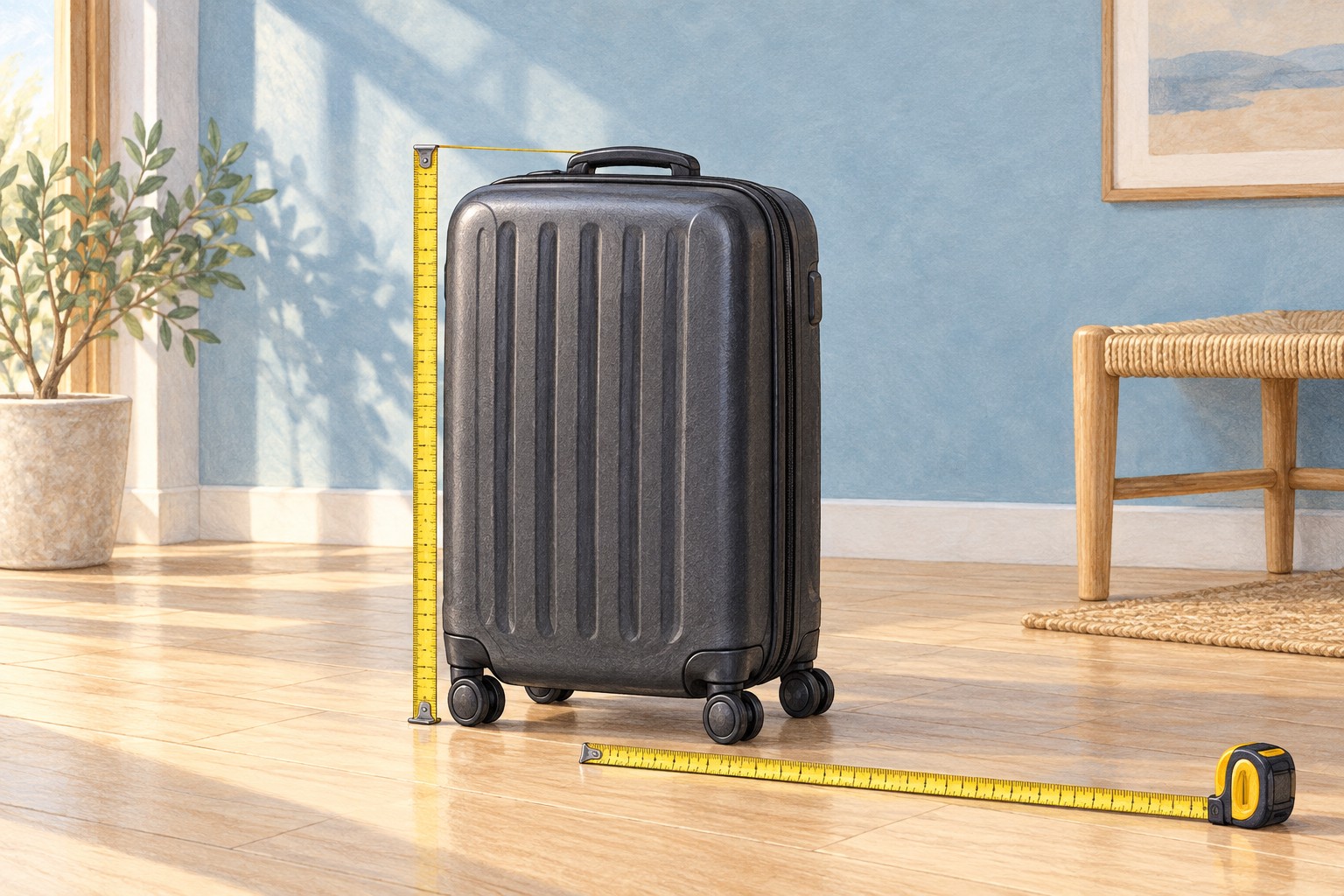
Repairability is a buying factor, not a substitute for suitable dimensions and comfortable handling. Roll the filled case, extend its handle and lift it using the intended carrying handles. Notice excessive movement, sticking adjustment stages and whether the handle height suits your posture.
After buying, keep the instructions and model photograph together. Inspect visible damage early before a journey rather than searching for a component the evening before departure. A repairable design is most useful when its parts can be identified clearly and the intended service route is genuinely usable.