Checking low-emission zones before a city trip
For a city trip by car, identifying the destination on a map is not enough. Check whether your vehicle may use the intended approach and parking location.
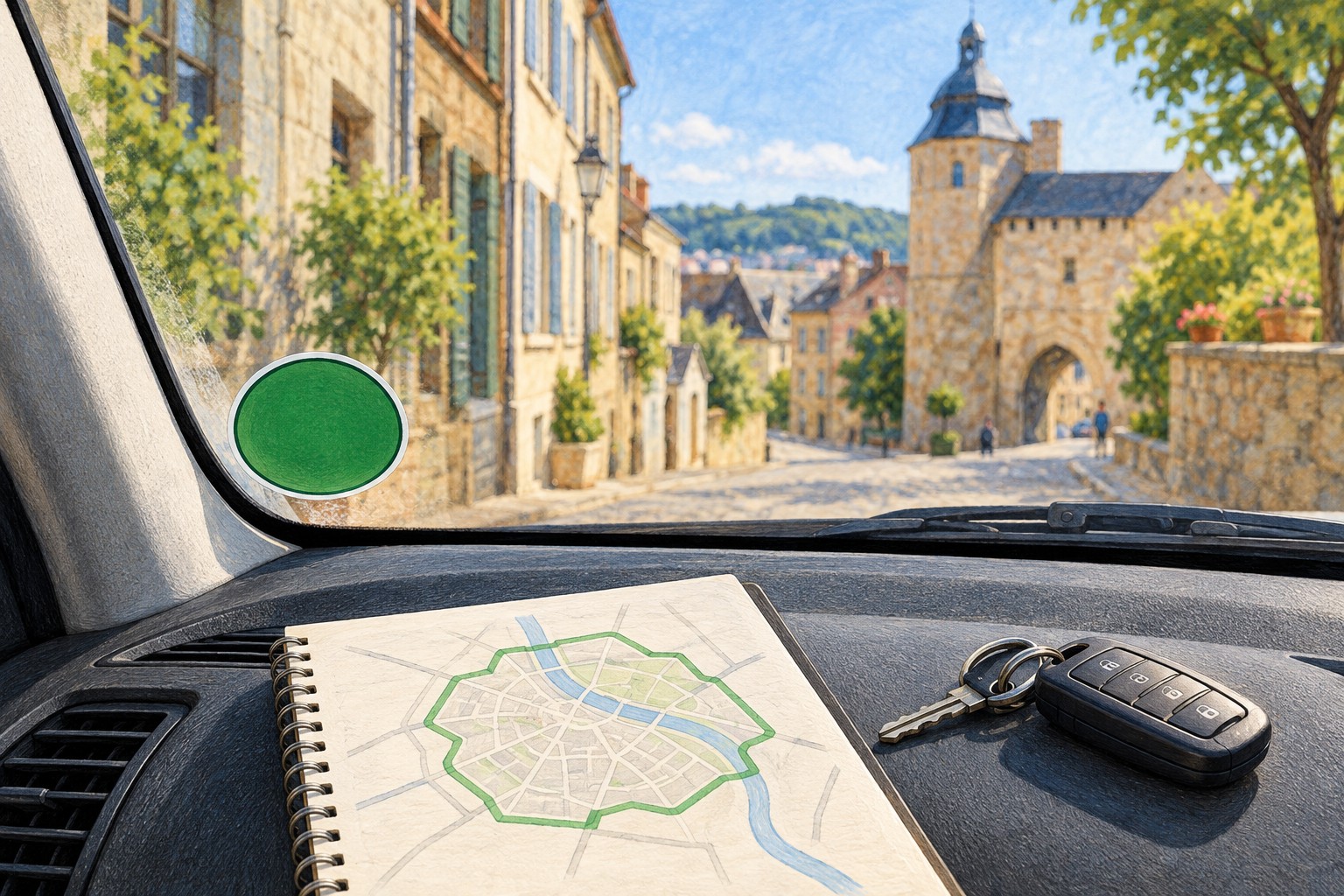
Check the actual journey, not only the city name
Start with the accommodation address and parking entrance. Mark both on a current map. A hotel near the edge of a centre may be accessible by a different street from the one suggested by navigation. Even a short part of the approach inside a restricted area belongs in your assessment.
Germany’s Federal Environment Agency provides an overview of German low-emission zones. For a particular journey, also consult the responsible city’s current information. Review its boundary map, vehicle requirements and any additional access restrictions. Do not transfer arrangements from a previously visited city to the next destination without checking.
Use the date of your journey. An older forum discussion may describe a rule that has since changed. Base the final decision on the responsible authority rather than relying only on a summary in a mapping app.
Match the vehicle with the required evidence
Have the vehicle documents available and compare their details with official requirements. Informal descriptions such as a new diesel or small car are too vague. German emissions stickers correspond to the vehicle’s emissions classification, rather than simply its size.
Check which evidence must be obtained before travelling and how long that process takes. Having a suitable vehicle and having the correct displayed or registered evidence are separate questions. Do not assume that a hotel reservation automatically creates an exemption from restrictions.
With a rental car, explain the city and intended approach to the provider. If the actual vehicle is assigned only at collection, repeat the check then. A replacement vehicle can have different documentation and a different registration number from the one initially expected.
Prepare an accessible alternative
If use of the intended route remains unresolved, identify legal parking outside the affected area. Then examine the complete onward journey: stop location, operating hours, luggage route and return trip. A parking pin outside the boundary is useful only if its approach also remains suitable.
Compare this arrival with travelling by train. On a city-only weekend, a car left parked throughout the stay may create more organisation than benefit. When a touring holiday follows, collecting a vehicle after the city stay can be another option.
Retain the route and official information you checked. Continue to obey signs and current instructions on arrival. A saved navigation suggestion does not establish permission to enter, particularly when a diversion changes the approach you originally assessed.