Checking device compatibility for a travel eSIM
A travel eSIM is suitable only when the device, unlocking status and plan fit together. Check those three layers before choosing a package solely by its advertised data price.
Identify the exact device version
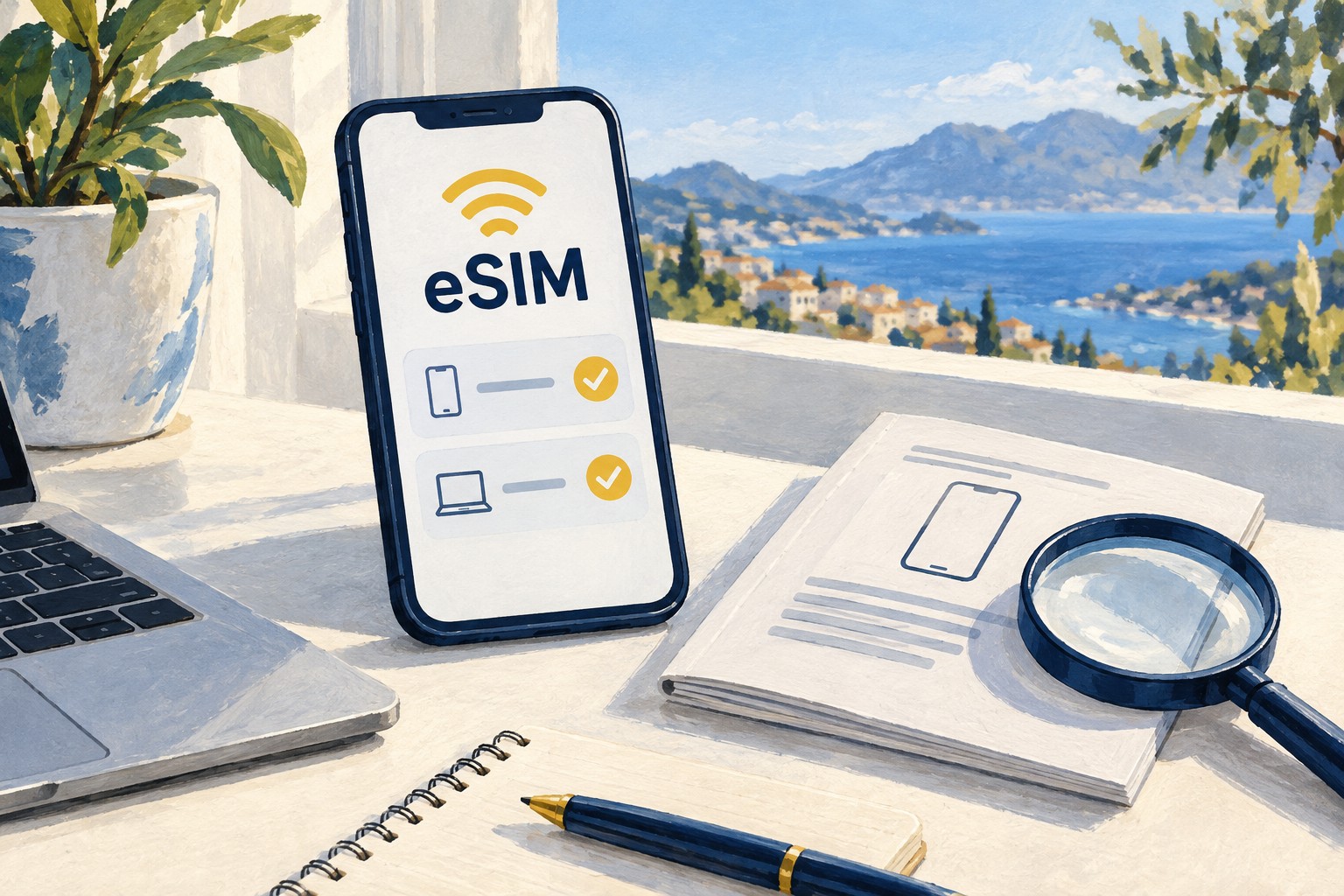
Record the manufacturer, model and regional version of the phone where relevant. Similar model names can have different requirements. Use current manufacturer information and the eSIM provider's compatibility details for that exact device. A general claim about modern smartphones is insufficient.
Check for a carrier lock as well. Apple explains that using another provider requires an unlocked iPhone and shows where to check the status. Other devices have their own manufacturer instructions. Resolve an existing restriction with the responsible provider before purchasing an additional package.
Look for necessary system updates or settings. Complete substantial changes early, with a reliable connection and suitable backup. A hurried interchange is a poor moment to start reading the prerequisites for the first time.
Separate data from reachability
Establish whether the offer provides only data or also calls and text messages. A data connection does not automatically supply a new number that others can call. Consider services tied to your existing number, such as an accommodation enquiry or an account verification message.
With multiple active lines, identify which handles data and which handles calls. Read the device and provider instructions for selecting them. Charges on the existing line can remain relevant even if the travel eSIM looks inexpensive. Avoid changing settings experimentally when you do not understand their effects.
Compare covered countries, validity, allowance and any conditions for sharing the connection. Check when validity begins: installation, activation or another event defined by the provider. That determines whether preparing at home is convenient or starts consuming the usable period.
Prepare installation and the return home
Read the complete installation instructions before departure. If setup needs a code or online account, arrange appropriate access while installing. Protect the records and do not publish activation details in a shared itinerary.
Note how to obtain support if setup fails. Do not delete a profile as an improvised first troubleshooting step; establish whether and how it can be installed again. Those options differ by device and offer.
Plan the return to normal settings too. Give lines recognisable names, record important changes and check the selected data connection after the trip. A compatible eSIM is one part of travel organisation, not a promise of reception in every place you visit.