Building a small electronics pouch for a weekend bag
A weekend electronics pouch should hold a manageable kit together. Start with the devices coming along rather than the number of available compartments.
Build one complete small kit
For each device, note how it charges and whether it needs a separate power supply. Then establish which tasks existing components can cover. One charger with several suitable ports may save space if its output remains appropriate during simultaneous use. Do not leave that question unresolved until you reach the hotel.
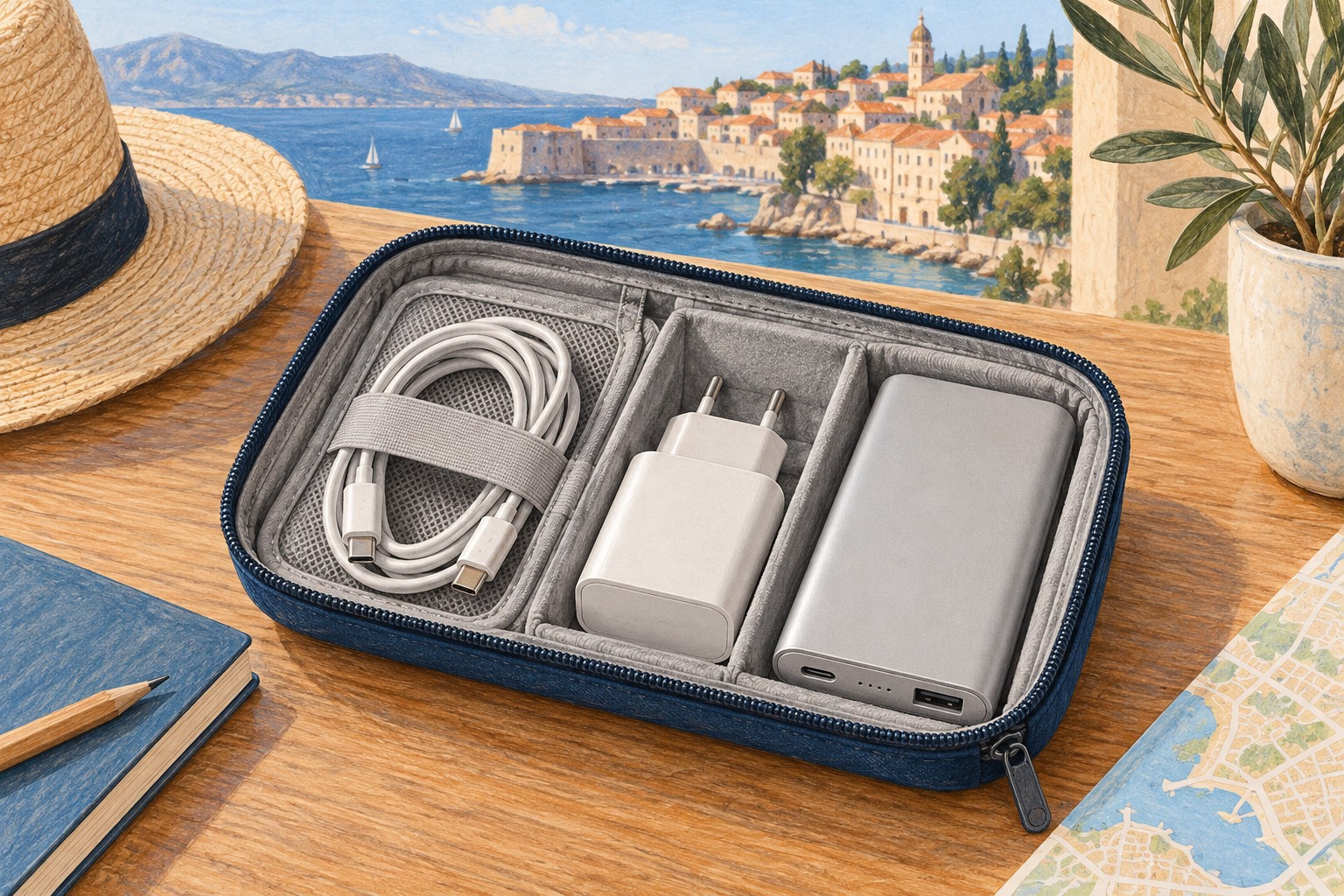
The kit might contain a charger, suitable leads, a necessary plug adapter and a proportionate backup. Memory cards or camera batteries only belong if the corresponding equipment is travelling. Keep small cards in a suitable holder rather than loose between power supplies. Separate electronics from liquids instead of squeezing everything into the same wash bag.
Fit the pouch to its contents
Arrange the kit on a table as it will sit inside the pouch. A flat design may fit your backpack better than a heavily padded cube. Extra padding is useful only when it addresses an actual protection need. Check whether heavy pieces knock against one another and whether sensitive connectors lie without pressure on them.
Open the filled pouch on a small shelf. If everything spills out, either useful divisions are missing or the opening does not suit the way you use it. If every lead must be pulled out of a tight loop, each charging session becomes awkward instead. One open compartment combined with a few well-sized divisions may be sufficient.
A brief dry run reveals the layout: remove only the phone lead and charger, place the open pouch on a narrow table and pack it again afterwards. If cards, adapters and several other cables must move each time, the most frequent task is unnecessarily complicated. Reposition occasional items or omit them. The pouch can retain some empty space; filling every compartment is not a sign of quality. A little room can make checking the complete kit much easier before departure.
One check before moving on
Take a private photograph of the completed kit or memorise its few components. Before checking out, use that arrangement to notice whether the charger remains in a socket. Keep the pouch in a consistent place inside your main luggage. Frequently used pieces can be easier to reach, but everything should rejoin the kit before you move on.
Battery carriage conditions apply regardless of how neatly the pouch is packed. For a flight, read the operating airline's current rules and keep relevant devices accessible. An organiser cannot make prohibited contents acceptable. On rail journeys, the clear arrangement and a brief visual check before leaving are equally useful.
After the weekend, remove unused items unless they serve a justified backup role. Over time the pouch becomes a kit matched to your journeys rather than a collection of every adapter you have ever bought.