Building a day plan with fixed and open time blocks
A day plan does not need a task for every fifteen minutes. Fixed appointments establish the framework, while open blocks make the time between them usable.
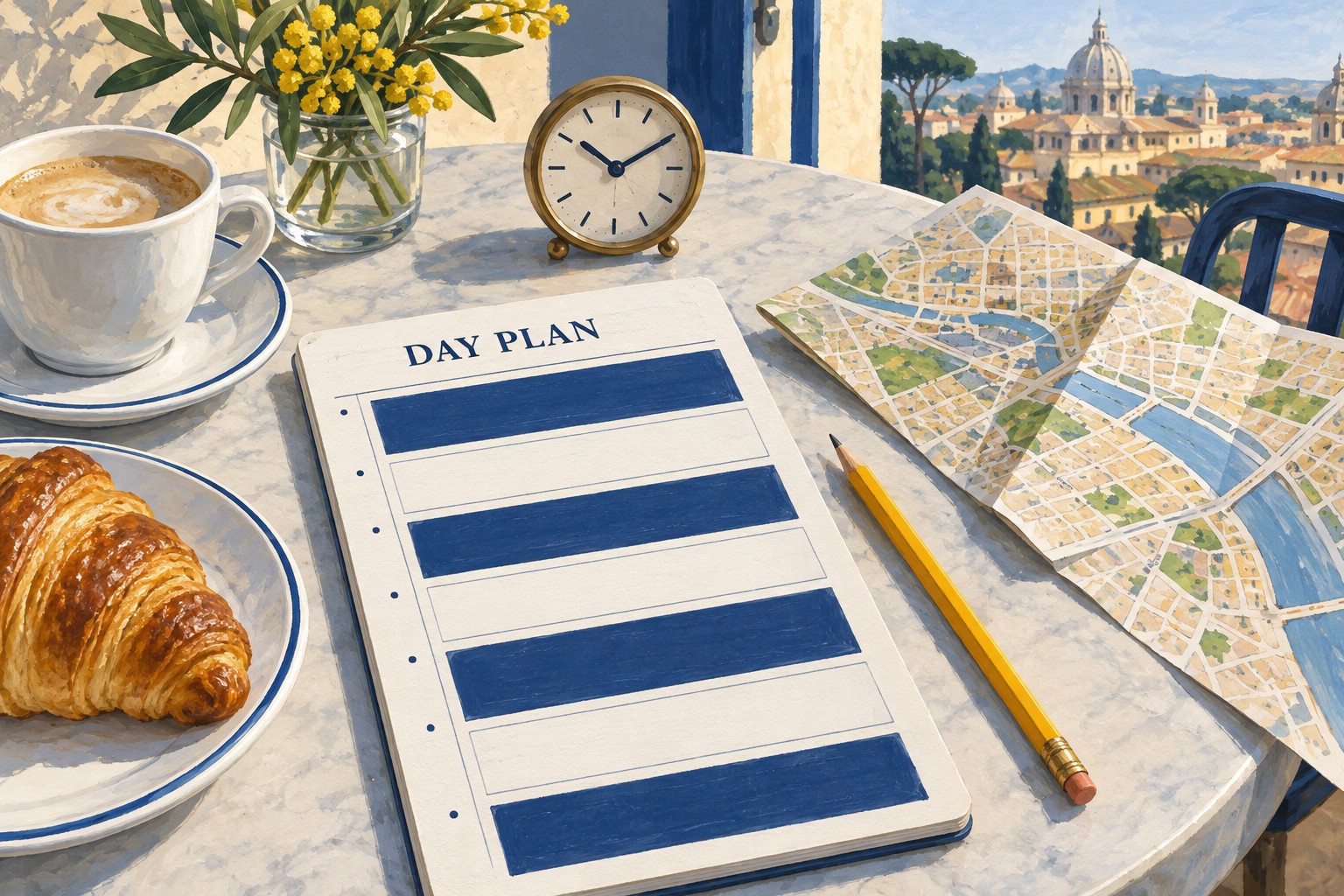
Fix only genuine commitments
Start with booked admissions, tours, agreed meetings and the return journey. Label what each time means: start, admission or intended arrival. This avoids mistaking a departure time for the moment to begin walking towards the station.
Add the actual journey before each appointment. That may include collecting coats, leaving the building, walking and changing transport. A connection between two stops is not automatically the whole transfer. Apply the same method to the final journey back to the accommodation or station.
Identify which items can move. A self-directed walk is usually more flexible than a reserved tour. Giving everything the same visual weight makes the schedule look stricter than it needs to be. Two or three recognisable commitments are easier to keep in view.
Give open blocks a purpose
An open block can be for food, rest or exploring a district without selecting every establishment in advance. Give it an approximate area and an endpoint. Choices remain open while the connection to the next appointment stays understandable.
Do not count a break simultaneously as transfer time. If the entire lunch period is needed to reach the next museum, the plan contains no actual lunch break. Shorten an optional visit rather than allocating the same time twice.
For example, suppose two hours remain between a morning exhibition and an afternoon tour. Some of that is needed to leave the building and travel. The remaining portion can accommodate food and a short unstructured walk. If the exhibition runs longer, shorten the optional walk first rather than the necessary journey to the tour.
Adjust according to dependencies
When an appointment changes, first inspect the journeys directly affected. Swapping two flexible items may be enough; a completely new day plan is not always necessary. Tell the group the revised next commitment instead of merely announcing that everything is now running later.
If interests differ, agree on a clear meeting point and attainable time. A map marker alone can be ambiguous at a building with several entrances. Name a recognisable place and decide how another change will be communicated.
Allow a shorter version of the day. It can finish after the most important visits without completing every item on a list. The plan has served its purpose when fixed commitments fit together and decisions remain possible without constantly recalculating the whole schedule.