Assessing boot space before booking a rental car
An advertised vehicle category says little about fitting four suitcases and a pushchair together. Assess the luggage space against the actual items you intend to carry.
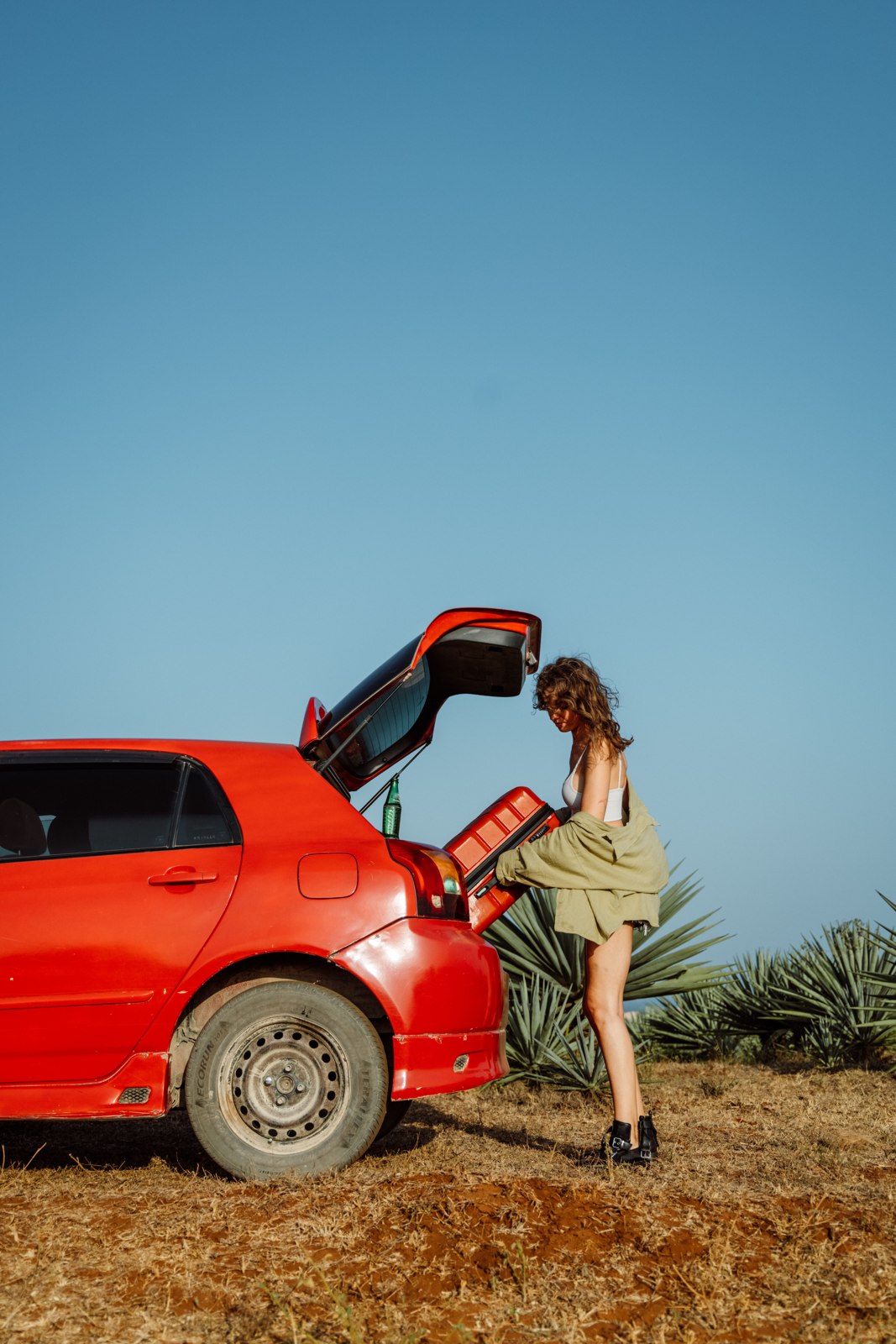
Start with the items you will carry
Write down what is actually travelling: large suitcases, cabin bags, a pushchair, sports equipment and the bag needed during the drive. Measure bulky pieces when packed or folded. A description such as three suitcases is not very informative when their dimensions differ substantially.
Consider which items can be stacked and which must not carry weight. Soft bags may use irregular gaps, while a rigid suitcase requires its full footprint. Delicate belongings also need room without pressure or unwanted movement during the journey.
Account for occupied seats. A generous capacity with the rear bench folded is irrelevant if passengers will sit there. The position required for child seats belongs in the same assessment rather than being treated as an unrelated detail.
Compare category, opening and cover
Rental offers often show an example model alongside a vehicle category. Read what is actually promised. A photograph does not reliably guarantee that exact boot. For unusually bulky luggage, ask about available arrangements instead of relying entirely on a small suitcase symbol in the listing.
Volume figures can help comparisons but do not describe the loading aperture, height beneath a cover or wheel arches. A long item may not pass through the opening even when the theoretical volume seems sufficient. Look for measurements and photographs of the particular model where that model is confirmed.
Consider whether everything can be secured in the intended luggage area. A plan that depends on keeping large objects in passenger footwells or obstructing rearward visibility is not a satisfactory substitute for an appropriately sized vehicle.
Try the complete load before leaving
Load all your luggage at the collection station before setting off. Check that the tailgate closes without forcing it and that regularly needed items remain accessible. Separate a small journey bag from belongings only required at the hotel.
If the load does not fit, raise the issue before departure. Another vehicle is not automatically available or free of charge, but resolving the problem at the desk is easier than carrying unsuitable luggage arrangements through several travel days.
Allow for the return journey too. Purchases need space, while wet or dirty equipment may need separate storage. A modest reserve can be more useful than a boot that works only when every bag follows one perfect packing sequence, particularly when several travellers unpack at different times.