Vienna: choosing neighbourhoods for a first visit
Vienna is easier to understand on a first visit when you distinguish the historical centre, museum area and other neighbourhoods. A deliberate selection is more useful than looking for one district that should provide everything.
Innere Stadt: short distances, many possible interruptions
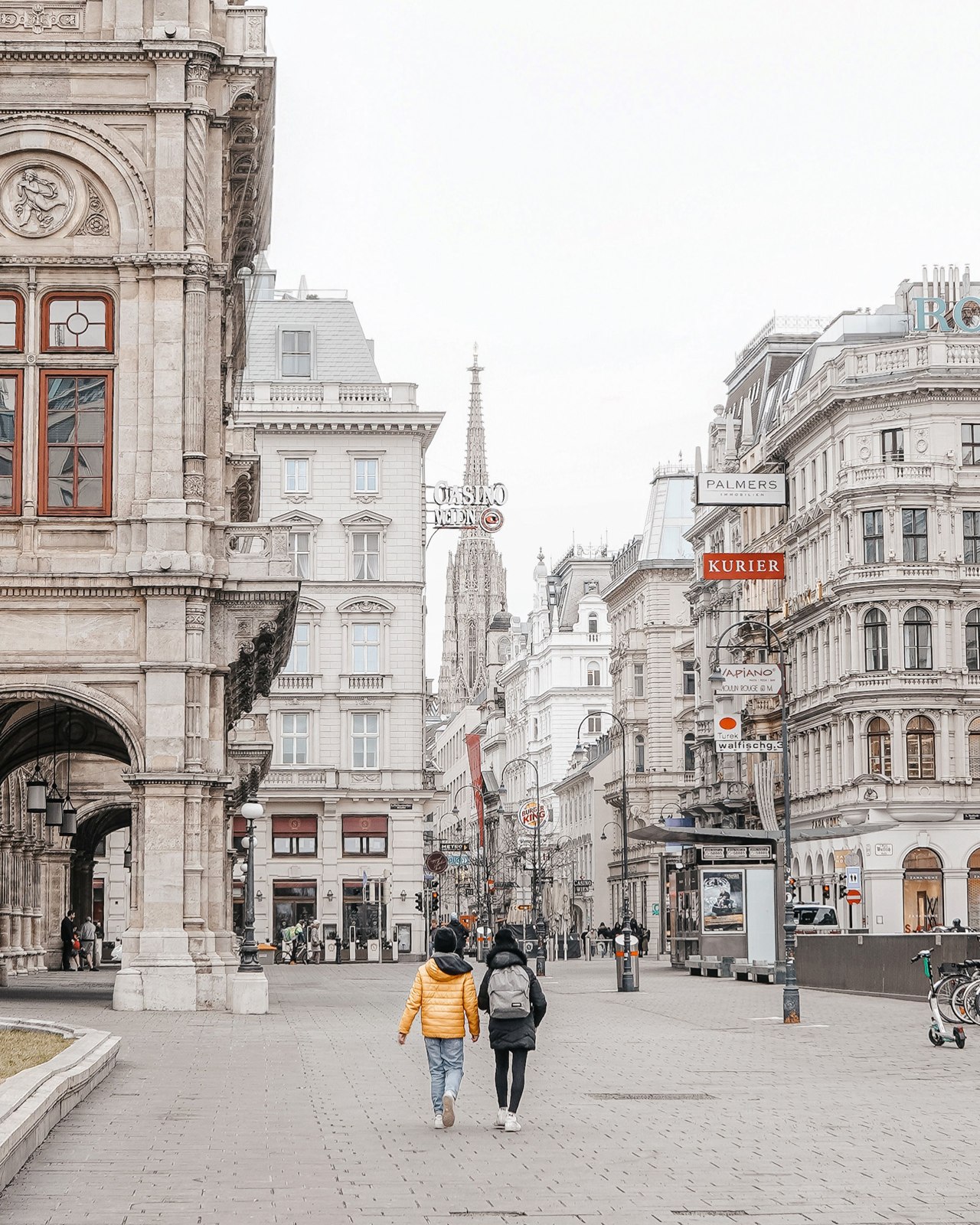
The Inner City is a natural introduction to St Stephen’s Cathedral, central shopping streets and the Hofburg area. Its compact appearance can be deceptive: entering churches, collections and cafés slows the day even when the actual walking distance is modest. Decide which interior will define the first day.
Walking between central squares can work without minute-by-minute scheduling. A reserved tour, however, requires the correct entrance. Large building complexes do not necessarily admit visitors at the point marked by a general map pin. Save the precise address from your confirmation.
The Inner City can be a convenient accommodation area when many of your destinations are here. Still compare the final luggage journey. Pedestrian streets, paving and the distance from the actual stop affect arrival more than the broad description “in the centre”.
MuseumsQuartier and Neubau: build an art-focused day
The MuseumsQuartier area can be combined with time in Neubau. This is a different plan from quickly linking the best-known historical facades. Select a collection for its contents rather than the institution’s fame alone. An exhibition that genuinely interests you can occupy several hours of attention.
Afterwards, nearby streets offer a change towards smaller shops and places to eat. You do not have to enter another museum immediately. Companions with different artistic interests can agree a separate period and meet afterwards at a precise location.
Remaining in this area for dinner may make sense. Returning to the historical centre solely for a widely known restaurant should be a deliberate choice. The additional journey interrupts an otherwise connected day.
Leopoldstadt and Prater: more space between buildings
Leopoldstadt and the Prater can give the trip a different sense of space. Decide whether you want the amusement area, a walk in the green surroundings or both. These are frequently mentioned together but represent different activities and possible spending.
An outdoor afternoon can complement a museum day. Poor weather does not require you to preserve the original order. Keep an alternative that is reachable without another long journey. Families can also agree which paid activities they actually want before arriving, rather than making every decision at a ticket counter.
Treat Schönbrunn as a destination in its own right
Schönbrunn should not appear as a brief addition between two central appointments. Travel, access, the selected visit and walking within the grounds together require a substantial block of time. If the palace is the main wish, build a major part of the day around it and reduce the other central sights accordingly.
Check current tickets and visit types with the operator. A park walk, a particular palace route and additional facilities are not automatically included in the same way. Buy for your interests and available time rather than choosing whichever option has the longest list.
Your accommodation does not have to be immediately beside Schönbrunn. A suitable transport connection from an otherwise useful base may make more sense than organising the whole trip around one visit.
Test an accommodation location with three real journeys
For each property, compare arrival with luggage, travel to the most important visit and the return after your planned evening. A good result for one journey does not always compensate for awkward connections on the others. Include changes and walking rather than comparing displayed travel times alone.
For three days, a clear division might be historical centre, art and surrounding streets, then a substantial outdoor or palace visit. This is not a prescribed Vienna itinerary. It simply shows that the city supports different kinds of stay.
At the end of each day’s plan, identify one optional stop. If a café break lasts longer or an exhibition holds your attention, omit that stop first. The selection remains flexible while important reservations and the journey home stay visible.