Trier: planning a walk through Roman history
Trier’s Roman monuments can form a themed city visit. They are not all immediately adjacent, and entering them adds time beyond the walk itself.
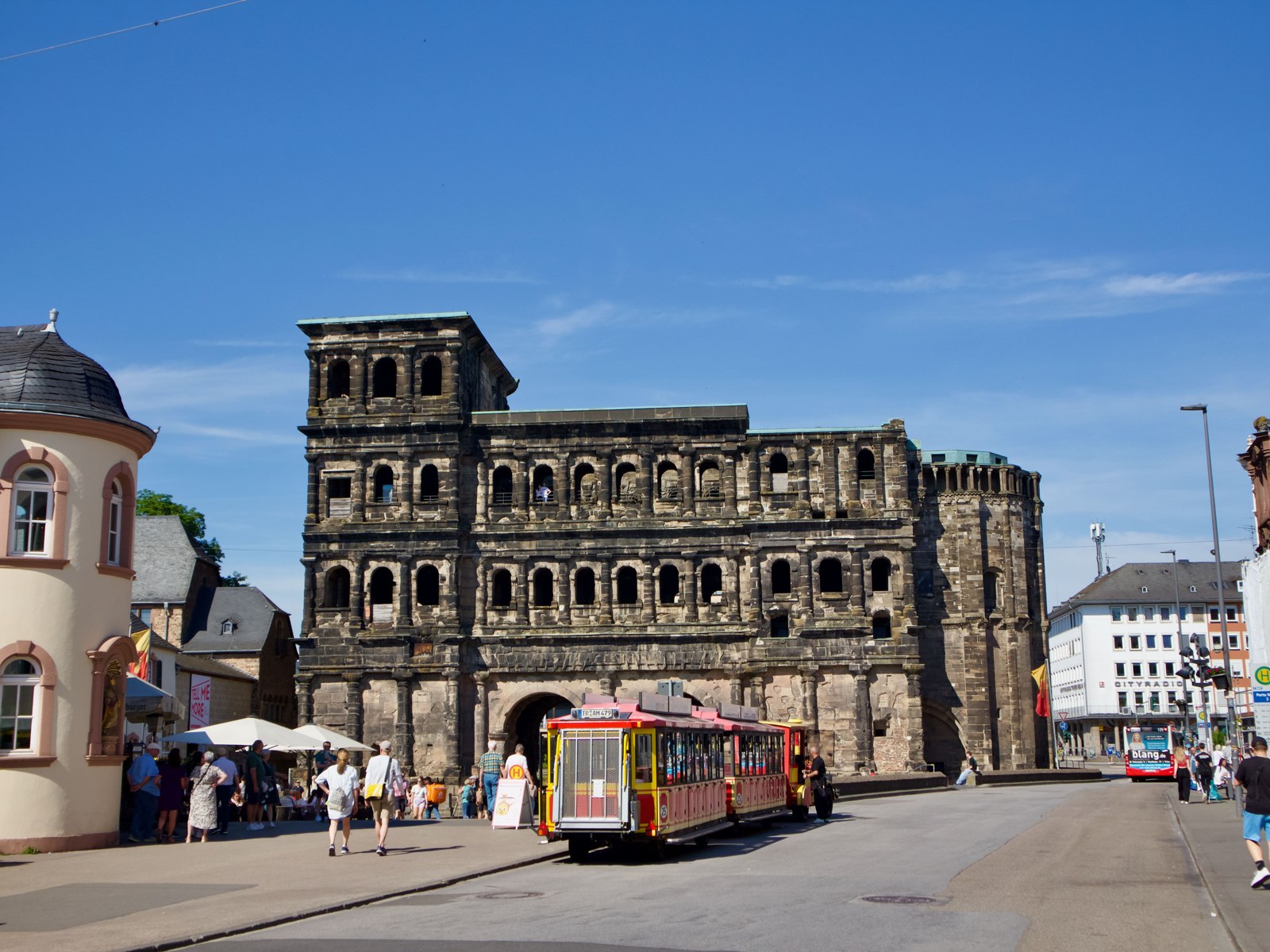
A clear starting point in the north
The Porta Nigra provides an obvious orientation point. Decide whether to look at the exterior or enter the monument. Official visitor information describes admission and current access; check it for your travel day. A photograph outside and a full visit are different undertakings.
Continue through the central streets from there. Let present-day squares and shops remain part of the experience. An exclusively thematic checklist can otherwise make everything between the ancient monuments seem like empty space to cross.
Select the southern destinations
The Imperial Baths and other ancient sites extend the walk. Mark which places genuinely belong in your plan. The amphitheatre is not simply another tiny stop beside the northern starting point. If you want several interior visits, reduce other activities.
A combined ticket may be financially useful, but judge it against the places you actually want to see. Owning a pass is not a reason to add a distant site when time and energy are lacking. Compare the currently included monuments with a realistic day rather than trying to maximise a nominal ticket value.
Leave time to absorb the history
After two detailed visits, take a break before adding more information. Choose somewhere along the route. A meal across the centre may otherwise create an extra return journey.
With children, the contrast between a gate, baths and a performance venue can provide a connecting theme. You do not have to read every room label or information panel. One concrete question at each place is more useful than trying to absorb the entire city’s history in a day. Adults benefit from weighting the visit around their interests too.
Check the return before another admission
Before entering another site, calculate the time remaining before luggage collection or your train. Admission arrangements, walking within the site and reaching the station are separate parts of the schedule.
For a second day, retain one previously omitted focus. Note what interested you most: architecture, everyday life or archaeological objects. This makes a later visit more purposeful. A clear historical theme does not require collecting every available attraction.