Planning a countryside outing from a city base
An outing beyond the city can complement a break when the outward journey, visit and return form a manageable day. Distance alone is not an adequate measure.
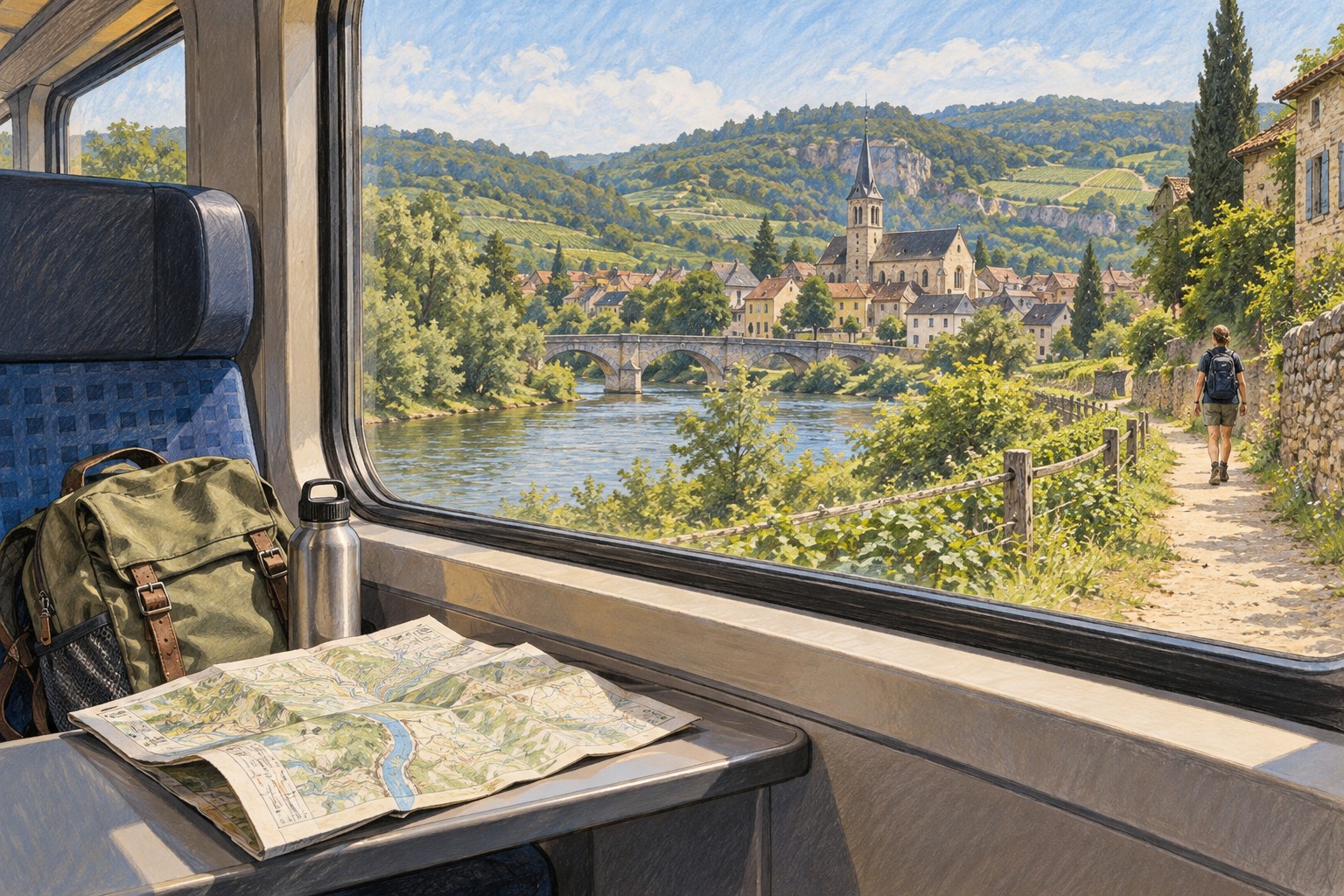
Choose a specific purpose
Decide whether you want to visit a town, follow a short nature route or simply spend time outside the city. Those aims need different connections and equipment. A station near attractive scenery does not automatically mean a suitable permitted walk starts there. Check the actual starting point and access.
Use current information from the transport provider and destination. Seasonal services, closing days and construction can change an otherwise simple outing. If one particular venue is the reason for going, confirm its opening on your travel date. An attractive patch of map does not replace that check.
Assess outward and return travel as a pair
Find a suitable return service first, then work out how much visiting time remains. An early train out may look appealing while the final connection home runs infrequently. Avoid depending on one extremely tight service if missing it would change the whole evening. Record a later or otherwise workable alternative.
Include the walk between stop and destination and time for a break. A short mapped circuit can take longer because of surfaces or gradients. Choose a route suited to the group and follow local information. Demanding routes require their own appropriate preparation; a general city-outing plan is insufficient for them.
Compare the final return service with an earlier sensible departure. The last possible connection should not automatically become the planned target. Returning earlier may leave a margin without greatly shortening the visit. Also establish whether tickets are tied to a particular service. A later train shown in a timetable is a workable alternative only if the actual conditions let you use it or you have accounted for a possible additional fare. Availability and ticket validity are separate questions.
Keep a shorter version available
If weather or transport conditions are unsuitable, a closer destination or shorter route may be preferable. Decide that alternative before leaving where possible. The group then need not invent a completely new route under pressure on arrival. Official warnings and closures take priority over previously listed wishes.
Pack for the actual period and expected conditions. Necessary drinks, clothing and information should be reachable. Do not rely on a food stop whose opening you have not checked. Equally, a brief outing need not carry equipment for every imaginable activity.
Leave enough flexibility in the subsequent city evening. A restaurant or event booked immediately after the return creates additional pressure. The outing should complement the stay rather than turn the whole day into a fragile chain of connections.