Ghent: exploring waterways and the old town on foot
Ghent’s waterways help with orientation while bridges and smaller streets shape the walk. Combine the historical centre with a quieter section without requiring a complete circuit.
Keep the central views in one section
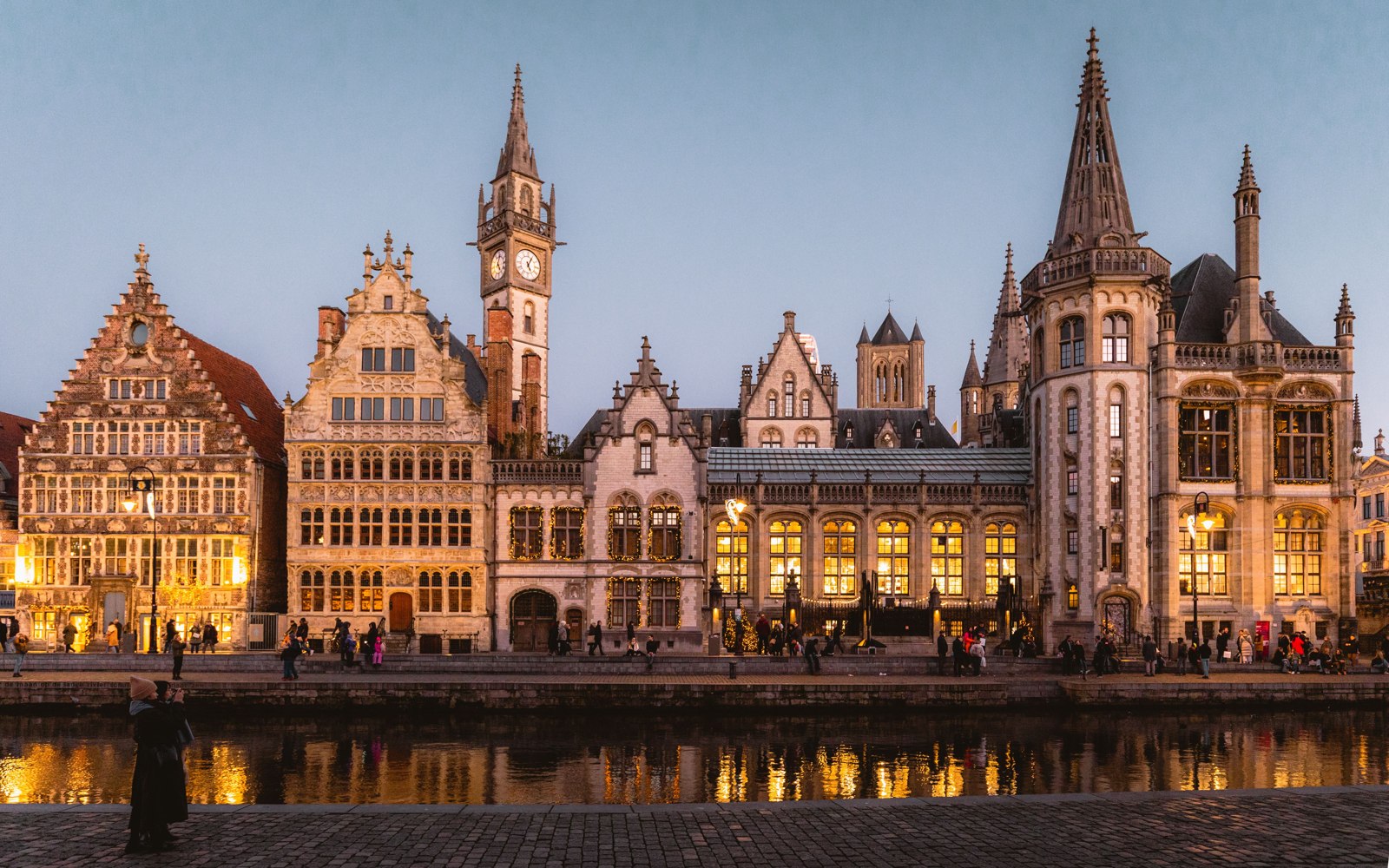
Graslei and Korenlei face one another across the water. St Michael’s Bridge provides another perspective on the central area. Give yourself time to look rather than treating the route solely as transport to the next ticketed attraction.
The well-known towers and central squares can form another short section. If entering a church, the belfry or an exhibition, check access separately. An outdoor walk and a substantial interior visit cannot be assigned the same duration.
A small route with a few connections is sufficient for a first visit. The official city walk offers orientation, and you can select parts. Completing the published route is not compulsory when a meal or collection takes longer.
Add Patershol or another waterside section
Patershol offers a different street pattern and can support its own stay. Decide whether to eat, explore the lanes or visit a specific place there. Without a focus, you may merely hurry through before returning to the centre.
Alternatively, extend the waterside walk. Official route information continues through further canals and areas. Check the real length of the portion you choose. A waterfront path can extend farther than the next visible buildings suggest.
For limited mobility, consider bridge slopes and paving. A visitor map provides an overview without replacing detailed assessment of a suitable connection. Use an alternative crossing where necessary.
Separate the station from the old town in your plan
Arriving by train does not automatically place you within the walking route. Check the connection from the station on your booking to the first destination. If carrying bags, storage needs to fit that journey.
An overnight stay gives the following morning to revisit a section without an ambitious schedule. Another perspective on the same waterway can be more interesting than an additional distant stop.
Before returning, establish where the final walk ends and when to leave for the station. You then avoid constantly recalculating during the remaining time. The visit’s value lies in experiencing selected areas together, not in crossing as many bridges as possible.