Choosing an apartment with useful kitchen equipment
A kitchenette is useful when it can handle the meals you intend to make. Test the equipment against two or three realistic dishes rather than treating a long appliance list as the goal.
Let the meals define the equipment
Write down what you would actually prepare during the stay. Bread, fruit and yoghurt require a different setup from a cooked dinner for four. A sample meal makes the enquiry specific: pasta and vegetables call for suitable pans, a colander, a knife, a chopping board and enough cooking capacity. The word kitchen does not automatically confirm that every one of those items is supplied.
For a very short stay, a simpler menu may work better. Cooking once may not justify buying several seasonings and specialist ingredients. Choose meals that share ingredients to reduce leftovers. That is a planning choice, not a claim about what a host is obliged to provide. Only count on oil, salt or coffee being available when the listing or host explicitly confirms it.
Check capacity and working space
An appliance can be present but too small for your intended use. If necessary, ask about fridge size and whether it includes a genuine freezer compartment. A few breakfasts may require little storage, while larger food purchases create a different demand. Crockery deserves the same attention: four plates for four guests can be inconvenient if washing them between meals is difficult.
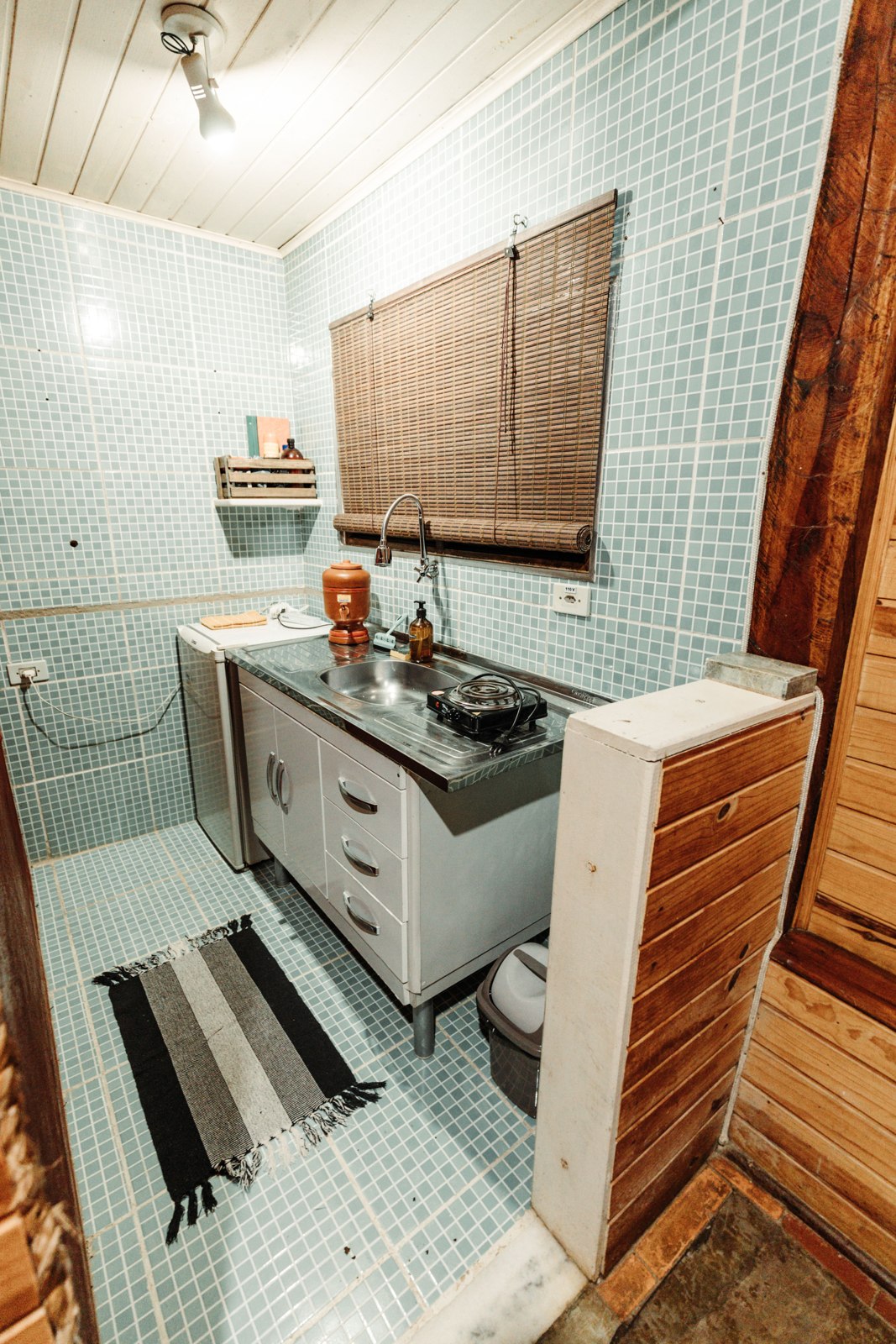
Study the clear worktop in the photographs. Where would you chop vegetables while the kettle or another appliance is in use? Is a socket reachable without putting a cable across the sink? If the images omit that area, request a description. Improvised placements should not form the basis of a self-catering arrangement you are deliberately choosing in advance.
Consider where everyone will eat. A narrow ledge with two stools serves a different purpose from a table seating the whole party. Travellers with children, or anyone expecting to spend evenings together, should count the actual seats. A desk does not necessarily substitute for a dining table, even if the photograph makes its surface appear generous.
Include shopping and departure
Find a suitable shop on the arrival route and check its own opening information. Delay buying perishable items until access to the accommodation is settled. An unresolved key handover could otherwise complicate the part of the trip intended to make things easier. For the first evening, a meal with few ingredients is often simpler to organise than an elaborate menu.
Before booking, read what is expected at departure. Must dishes be washed and put away, food removed or waste sorted into particular bins? Allow time for those tasks. A stated final cleaning charge does not automatically answer each question. Keep the house rules and ask about ambiguous wording so an early check-out does not turn into an avoidable rush to complete an unfamiliar routine.