Choosing a room with a desk for a work trip
A table in a room is not automatically a suitable workspace. For a work trip, translate the tasks you expect to perform into requirements for surface area, seating and surroundings.
Describe the work you need to do
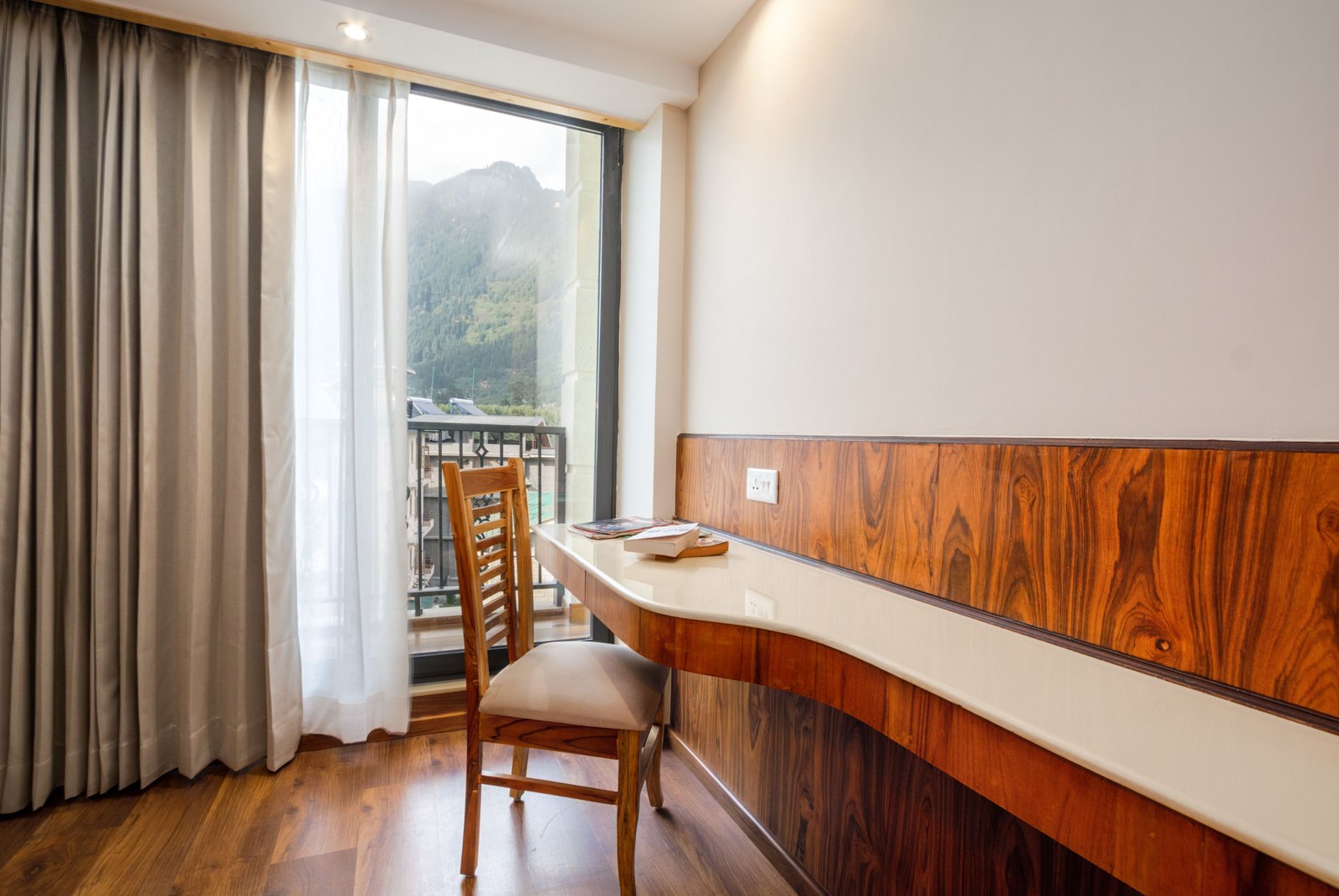
Distinguish between answering a few emails and working for several concentrated hours. A small ledge may be enough for a brief message. Spreading documents beside a laptop or joining lengthy meetings requires more usable surface. Tell the property how much space your equipment and papers need if the photographs do not make the table dimensions clear.
Establish whether the pictured desk belongs to your selected category. A lobby workstation or shared room serves a different purpose from a desk in your own bedroom. For confidential calls, follow your organisation's requirements as well. A publicly accessible area does not become suitable simply because it contains a comfortable chair and an electrical socket.
Assess the chair, lighting and connections together
Treat the chair as part of the workspace. Can it move under the table, and is there room for your legs? A low bench beside a high surface may look tidy without fitting your intended use. If you will sit for a long period, request a factual description or side-view photograph instead of assuming the furniture's appearance establishes its suitability.
Look for light at the working surface. A bright ceiling fixture is not the same as usable illumination for paperwork. Window position also matters for video calls. A very bright background may require you to face another direction. Consider whether the table permits that arrangement and whether the surroundings visible on camera would be appropriate for the conversation.
Check for reachable sockets and the connection you require. A socket by the bed is less helpful if the charging cable would cross the room. Do not assume there is a wired network connection simply because the property markets the room to business travellers. Ask about the specific feature when your work depends on it rather than accepting a broad suitability claim.
Match working hours to room access
Check whether the planned work falls within the period for which you have the room. A meeting before normal check-in or after check-out cannot be solved merely by choosing a room with a desk. Obtain a confirmed arrangement and price or plan another place to work. A tentative statement about availability may be insufficient when the appointment itself is fixed.
Identify a fallback for the most important commitment. That might be a reservable workspace whose access and opening hours you have checked. The purpose is to reduce a particular dependency, not eliminate every possible problem. If work is the main reason for the stay, give a usable desk and seating arrangement more weight than a decorative feature that contributes little during those hours.